
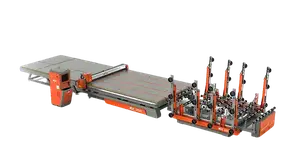

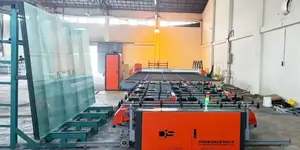
Most home workshops treat glass cutting as a rare, stressful task: mark the line, score once, hold your breath, and hope the snap follows the score. It does not have to be that way. In 2025, the market offers home craftsmen an unprecedented range of machines, from refined hand-held scorers to desktop CNC systems that once belonged in industrial fabrication shops. Brands such as DISAI have closed the gap between professional-grade equipment and home workshop budgets, making it easier than ever to cut mirrored panels, stained-glass blanks, and decorative tiles with factory-level precision. This guide examines the most capable glass cutting machines available to home craftsmen this year, explains what distinguishes each type, and outlines practical criteria to help you match a machine to your workspace and project volume.
What Home Craftsmen Need From a Glass Cutting Machine
The first step in choosing a machine is honestly assessing your workflow. A hobbyist who cuts a few 20 cm squares for coasters every month has very different requirements from someone producing custom cabinet doors or leaded-glass windows on a weekly basis. Cutting capacity, repeatability, and the ability to handle different glass weights should guide the decision long before aesthetics or brand loyalty come into play.
Manual Cutters: Precision at Your Fingertips
Traditional hand-held cutters remain indispensable for quick, freehand cuts and curved shapes. A high-quality carbide wheel mounted in an ergonomic handle, often oil-fed, can produce an even score line on float glass up to 6 mm thick. DISAI offers several pistol-grip and pencil-style cutters that use hardened tungsten-carbide wheels with replaceable tips, letting craftsmen maintain a consistent scoring angle without calluses. Manual cutters are inexpensive, silent, and require almost no maintenance, but they give little assistance with long straight cuts or repeated identical panels.
Bench-Mounted Score-and-Snap Systems
When straight cuts dominate your work, a bench-mounted score-and-snap machine is the logical upgrade. These devices lock the glass sheet on a rubber or cork bed, run a cutting head along a rigid guide rail, and then apply controlled pressure to snap the scored piece cleanly. The DISAI DCG-450 series, designed specifically for small-shop use, can cut glass up to 450 mm in both directions, with stop-lock bars that allow quick repeat cuts at precisely the same width. Craftsmen report a dramatic reduction in waste after switching from handheld cutting to a machine like this, because the mechanical alignment eliminates the wobble that causes edge chipping.
Desktop CNC Glass Cutters
For the craftsman who manufactures curved or irregular panels, or who needs to cut dozens of identical shapes per session, a desktop CNC glass cutter is no longer an unrealistic luxury. The DISAI GCS-700 CNC system accepts standard 2D CAD drawings and converts them directly into toolpaths, cutting circular leaded-glass patches, irregular mirror shapes, and complex decorative panels in a fraction of the time manual scoring would require. With a working area of 700 by 800 mm and support for glass thicknesses from 2 to 10 mm, it is one of the most compact CNC glass cutters available to serious home craftsmen. Its head uses a self-lubricating cutter paired with a high-torque stepper that maintains constant pressure, producing snap-ready scores even on textured or laminated glass.
Key Criteria for Choosing a Glass Cutter
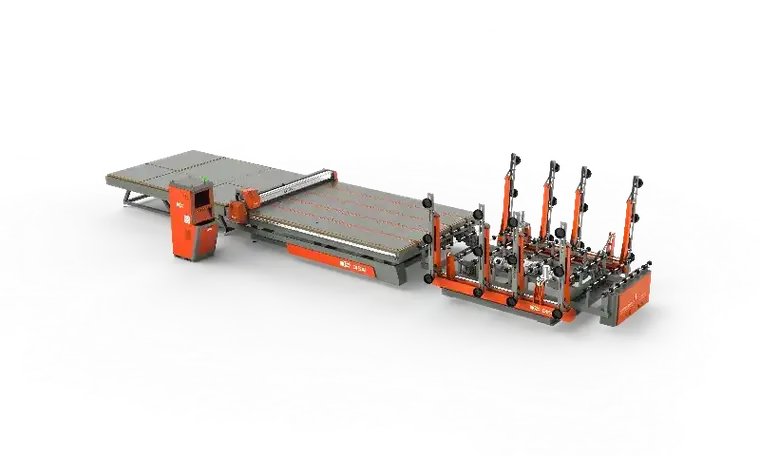
Regardless of which category attracts you, filter every candidate through these five criteria before making a purchase:
- Cutting accuracy and repeatability: Manual cutters rely on your hand stability; machines use rails and stoppers. If you cut more than ten identical panels per week, choose a bench or CNC model.
- Maximum glass thickness and sheet size: Verify the spec sheet supports the thickest glass you plan to process. A cutter rated for 4 mm float glass will not survive daily work on 8 mm mirror glass.
- Ease of setup and learning curve: A CNC machine demands time to learn CAD software, while a bench cutter can be used the day it arrives. Be realistic about your willingness to learn.
- Workshop floor and bench space: Desktop CNC systems such as the GCS-700 occupy less than one square metre, but they need a stable workbench and a clean power supply. Manual cutters fit in any drawer.
- Long-term durability and spare parts: Look for machines with replaceable cutting heads, accessible manufacturers, and documented maintenance routines. DISAI, for example, provides spare carbide wheels and pressure springs for all its cutter lines.
Comparing the Leading 2025 Models
The home-craftsman segment currently splits into three practical tiers. Understanding where each tier excels will prevent overpaying for capability you never use.
DISAI DCG-450 Pro Bench Cutter
The DCG-450 Pro is the most popular entry in DISAI's home-grade line. Its aluminium rail is machined in one piece, eliminating the joint misalignment found on cheaper two-piece rails, and the cutting head runs on six ball bearings for a smooth, chatter-free score. Model-specific features include a 90-degree stop for perpendicular cuts, a cutting width of 450 mm, and a breaking bar that distributes pressure evenly along the score line. For stained-glass artists and small cabinet shops, this machine is frequently the difference between salvageable and scrap panels.
DISAI GCS-700 CNC Glass Cutter
At the top of the home-craftsman range, the GCS-700 bridges the gap between a bench tool and a production machine. It comes pre-calibrated and includes DISAI's proprietary Glass Studio software, which simplifies importing DXF shapes and auto-generates the cutting sequence with minimum waste. Users can also control the cutting-head pressure digitally, which is critical when switching between 3 mm craft glass and 8 mm architectural float glass. The machine has an E-stop safety circuit, IP54-rated electronics, and a vacuum hold-down system that keeps sheets stationary without mechanical clamps.
Manual and Low-Cost Alternatives
Not every craftsman needs a powered machine. DISAI continues to sell its classic pistol-grip oil cutter and a straight-edge scoring jig that clamps to any stable table. These tools are ideal for apprentices, weekend hobbyists, and anyone who mostly cuts straight lines shorter than 400 mm. The price difference is significant, but you accept slower throughput, lower consistency, and more scrap-to-good output when working with brittle or patterned glass.
Safety Tips for Home Workshop Glass Cutting
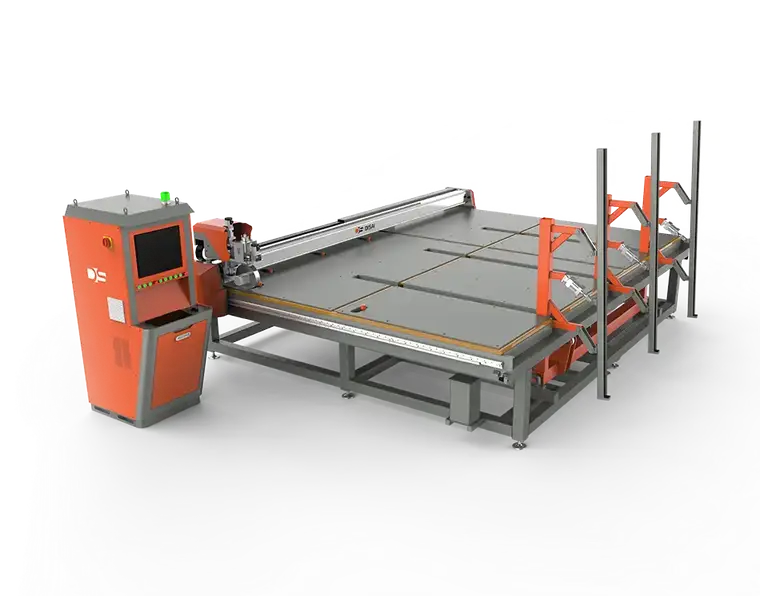
Safety should never be an afterthought when working with brittle sheet glass. The following practices are non-negotiable in a professional home shop:
- Always wear rated safety glasses with side shields; shards can travel further than you expect.
- Use cut-resistant gloves during the breaking step, not during the scoring step, where thick gloves reduce tactile control.
- Keep the workbench clean and dry; glass dust is abrasive and can damage the machine rails over time.
- Dispose of offcuts in a rigid-sided container, never in regular trash bags that can tear.
- When using a CNC cutter, never override the safety interlocks to watch a cut in progress.
Frequently Asked Questions
Can a beginner use a CNC glass cutting machine?
Yes, but expect a learning curve. The GCS-700 ships with pre-set profiles for common glass types, so a beginner can produce a correct first cut within an hour. Mastering nested layouts and toolpath optimisation will take a few weekends, but the software interface is far less intimidating than professional CAD packages.
Do I still need a manual cutter if I own a bench machine?
Most professionals keep a manual cutter in their apron. Bench machines handle straight cuts efficiently, but trimming a small sliver from a curved edge or scoring a tight corner is quicker with a hand tool. They are complementary rather than exclusive.
What maintenance does a glass cutting machine require?
Light machine oil on the cutting head bearings, a clean rail surface, and regular replacement of the carbide wheel are usually sufficient. For CNC systems, keep the vacuum pads clear of debris and check the spindle belt tension every few months. DISAI machines include a maintenance logbook in the manual to track these tasks.
Selecting the best glass cutting machine for a home workshop in 2025 ultimately comes down to honesty about your output, your workspace, and the thickness of glass you process. Manual cutters from DISAI remain the most affordable starting point, bench-mounted systems such as the DCG-450 Pro deliver predictable repeatability, and desktop CNC machines like the GCS-700 unlock creative shapes that were previously impossible outside an industrial setting. Invest in the tier that matches your workflow, maintain it properly, and the machine will pay for itself in reduced waste and cleaner cuts.