

In glass processing, cutting is never a single action. It is a two-stage sequence: scoring, where a precision wheel creates a shallow fissure on the glass surface, and breaking, where controlled force travels along that fissure to separate the sheet cleanly. While scoring often receives most of the attention in technical literature, the breaking step is where real-world edge quality is won or lost. A perfect score line followed by a poor break produces chipped edges, unwanted stress fractures, and wasted material. For fabricators aiming to maximize yield and deliver clean, consistent components, mastering the breaking step is not optional — it is essential. This article examines the mechanics, variables, and technology that define this critical phase of glass cutting.
The Role of Breaking in the Two-Stage Glass Cutting Process
Every glass cutting operation begins with a scoring wheel that creates a controlled crack — known as the score line — on the surface of the glass. This line is typically only 10 to 20 percent of the glass thickness deep. The purpose of scoring is not to cut through the glass, but to establish a path of least resistance for the subsequent separation.
The breaking step, sometimes referred to as snapping or separating, applies a calculated bending force to the sheet so that the score line opens and propagates vertically through the thickness of the glass. When executed correctly, the break follows the score line precisely, producing a clean edge perpendicular to the surface. When executed poorly, the break deviates from the score line, producing scalloped edges, stress cracks, or uneven separation that renders the piece unusable.
The Technical Principles Behind the Breaking Step
To understand why the breaking step demands careful attention, it is necessary to examine the underlying mechanics of glass fracture.
How the Score Line Guides the Break
The score wheel creates a small crack — the median crack — that penetrates into the glass thickness. This crack acts as a stress concentrator. When bending force is applied to the sheet, the tensile stress concentrates at the tip of the median crack, causing it to propagate downward in a controlled manner. The depth and geometry of the median crack directly influence how the glass will break, which is why scoring parameters — wheel angle, pressure, and speed — must be precisely matched to the glass type and thickness.
The Mechanics of Controlled Fracture
Breaking is achieved by inducing a controlled bending moment in the glass. The sheet is supported on either side of the score line, and a downward force is applied from above, creating tensile stress at the score line and compressive stress on the opposite surface. The key is to reach the fracture point quickly and consistently, without overstressing the material. Excessive force causes the crack to branch or run beyond the intended path, while insufficient force leaves the sheet partially joined, requiring additional handling that risks edge damage.
Key Variables That Influence Breaking Quality
Several factors determine whether the breaking step produces a clean edge or a reject. Experienced operators and modern automated systems alike must account for these variables:
- Glass thickness: Thicker glass requires a deeper score and a greater bending force to achieve a clean break. The distance between support points must also be increased to avoid local stress concentrations.
- Score line quality: A scoring wheel with the wrong angle or excessive wear produces a shallow or irregular score line, which leads to uncontrolled fracture during the breaking step.
- Breaking force and speed: The force applied during breaking must be calibrated precisely. Too slow allows stress relaxation; too fast risks edge chipping. Automated systems excel at maintaining consistent force application cycle after cycle.
- Glass temperature and composition: Tempered glass, laminated glass, and annealed glass each respond differently to breaking forces. Temperature variations across the sheet also affect fracture behavior — cold glass is more brittle, while warm glass bends further before breaking.
- Support geometry: The width of the support bars and their alignment relative to the score line determine how evenly the bending moment is distributed. Misalignment creates torsion that pulls the break off course.
Manual vs. Automated Breaking: A Comparative Analysis
Manual breaking — using hand tools or simple edge-breaking benches — remains common in small workshops and specialty fabrication. However, for high-volume production, manual breaking presents significant drawbacks that directly impact the bottom line.
- Consistency: A manual operator's breaking force and technique vary from piece to piece, leading to inconsistent edge quality and a higher rate of rejects. Automated breaking systems deliver identical force application on every cycle.
- Speed: Manual breaking requires careful positioning, judgment, and rework. A dedicated breaking machine completes the separation in a fraction of the time, increasing throughput without adding labor hours.
- Edge quality: Human judgment cannot match the precision of a calibrated breaking beam. Automated systems produce cleaner edges, reducing the need for further finishing operations.
- Safety: Handling large sheets of glass manually introduces a higher risk of cuts and ergonomic strain. Automated breaking removes the operator from the high-risk zone.
- Material utilization: Poor breaks waste glass. Even a small improvement in break accuracy translates into meaningful material savings over thousands of cuts per day.
Automated Breaking Technology from DISAI
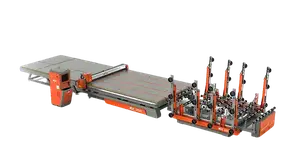
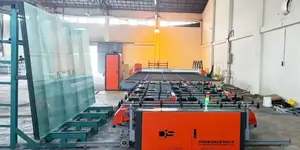
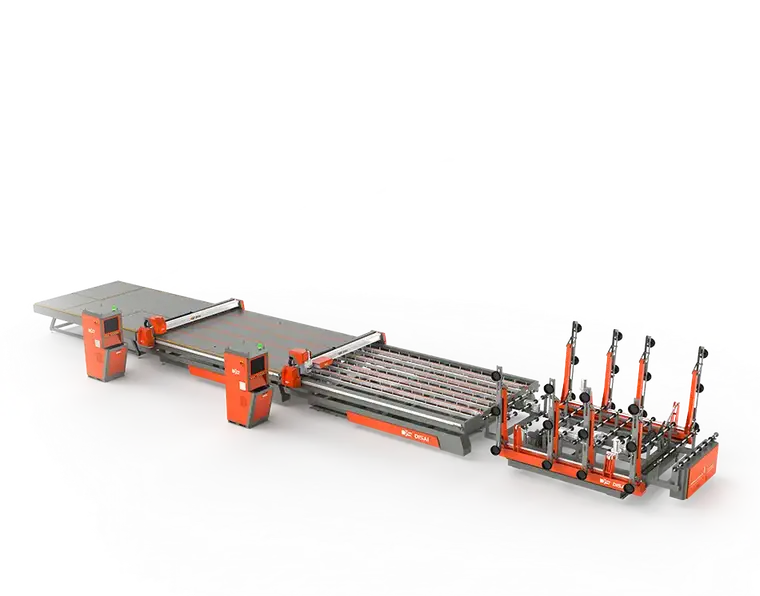
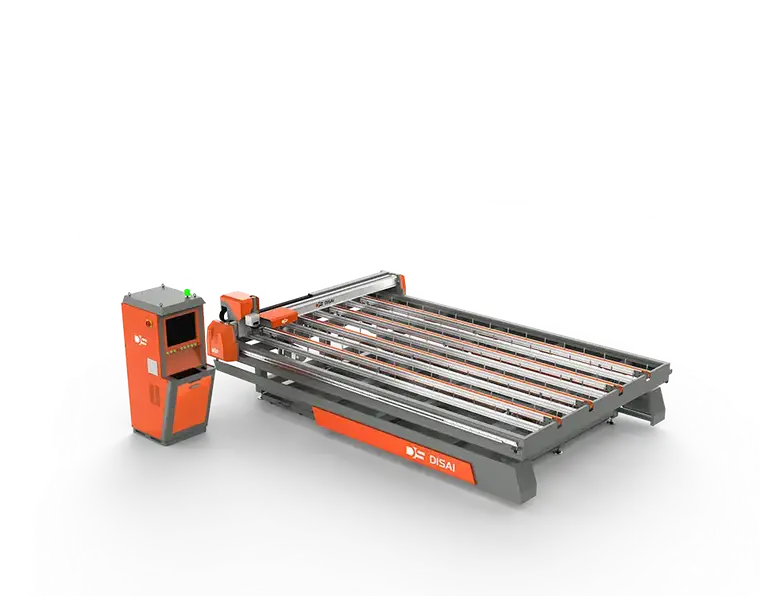
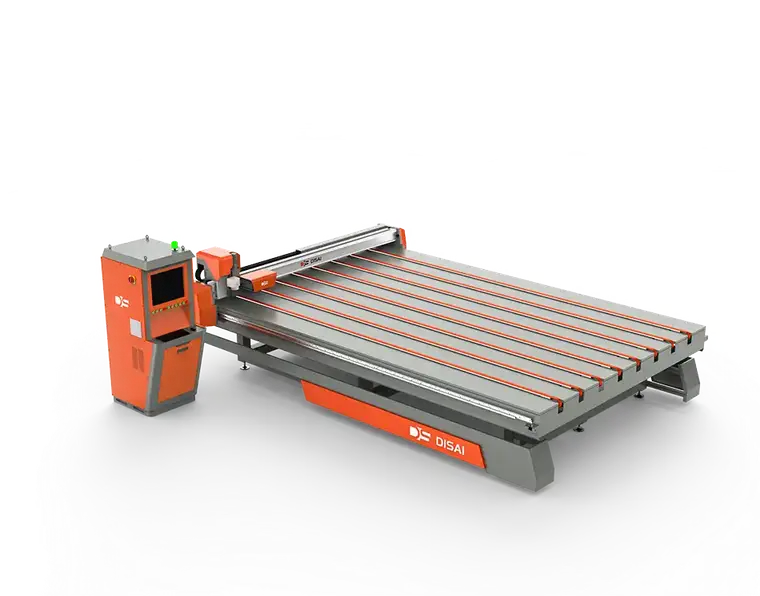
For fabricators seeking to optimize their glass cutting line, DISAI offers automated breaking solutions engineered for precision, repeatability, and seamless integration with existing cutting tables. DISAI systems are designed to handle a wide range of glass thicknesses while maintaining tight tolerance on the breaking axis, ensuring that the separating force is applied exactly where the score line dictates.
The DISAI breaking platform incorporates precision-ground support rails, programmable force control, and CNC-driven positioning. This allows operators to define breaking parameters directly from the cutting program, eliminating manual guesswork and enabling fully automated operation from raw sheet to finished part. The result is a significant reduction in edge chipping and off-score deviation, along with measurable gains in throughput.
Because DISAI understands that no two production environments are identical, the company's automated breaking systems are configurable to suit individual line layouts, sheet sizes, and throughput targets. From standard float glass to more challenging materials, DISAI equipment maintains the consistent force profile required for a clean, repeatable break.
Making the Right Investment in Breaking Technology
The breaking step is a decisive factor in the overall quality and economics of glass cutting. Fabricators who invest in automated breaking technology gain a tangible competitive advantage: higher yields, cleaner edges, faster cycle times, and reduced reliance on skilled manual labor. The choice is no longer whether to automate, but which system best matches the production profile.
For companies ready to upgrade their breaking process, a consultation with the DISAI team provides a practical starting point, with recommendations framed around your specific material mix, sheet sizes, and volume requirements.