
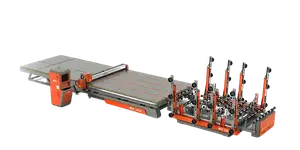
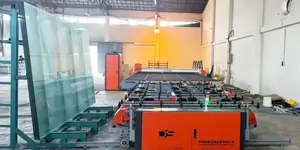
For many glass fabricators, the decision to invest in a CNC glass cutting machine is no longer a question of technology adoption but one of economic survival. As thinner, stronger, and more architecturally demanding glass products enter the market, the margin for cutting error continues to shrink. A CNC glass cutting machine from DISAI brings precision to every production run — and that precision has become the difference between a profitable 2025 and one filled with costly rework. This article examines exactly where that precision pays off: in material yield, in labor efficiency, and in the ability to quote and win complex projects with confidence.
Why Precision Is the Real Currency in Glass Fabrication
Glass is a brittle material with zero tolerance for secondary damage. A slight chip along the score line, a micro-crack from an inconsistent cutting wheel angle, or a dimensional deviation of even half a millimeter can render a finished panel useless for its intended application. In fields such as architectural glazing, automotive glazing, and display glass, every panel must meet the exact specifications of the drawing — not approximately, but every time.
A CNC glass cutting machine addresses this by controlling the entire cutting sequence through software. The cutting head moves along a programmed path with consistent pressure, scoring depth, and speed. Human variability is removed from the equation. The result is a repeatable process where the first piece and the thousandth piece are identical.
Repeatability Beats Peak Performance
An experienced manual cutter might score a perfect line once. But maintaining that level of accuracy through an eight-hour shift, across hundreds of panels and several thicknesses, is beyond any human operator. CNC machines are built to deliver the same precision at 9 am and 5 pm. That consistency translates directly into fewer rejects, less rework, and stronger customer trust.
How CNC Glass Cutting Machines Compare with Conventional Methods
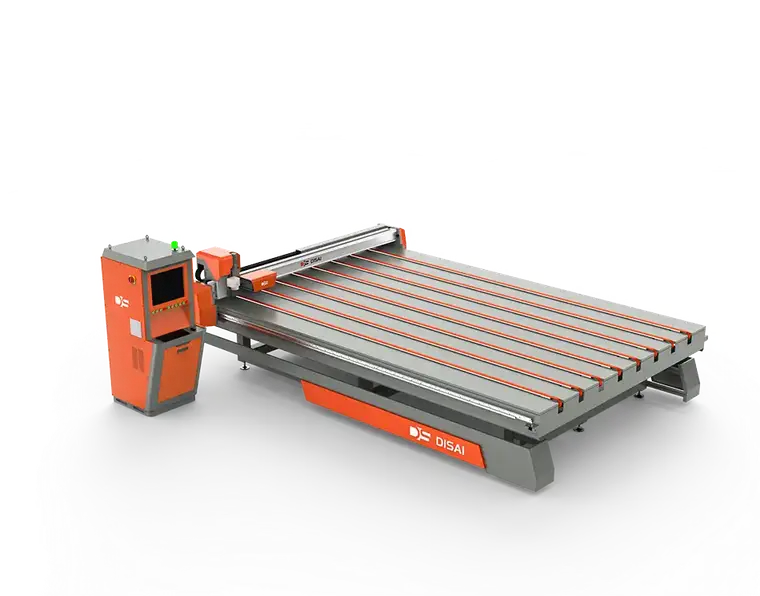
When evaluating a CNC glass cutting machine, the natural reference point is the existing production line, often a manual cutting table or a semi-automatic machine. The differences go far beyond speed:
- Cutting accuracy: Manual cutting depends on the operator's hand-eye coordination, with tolerances measured in millimeters and influenced by fatigue. CNC glass cutting systems maintain tolerances within fractions of a millimeter throughout the production day.
- Material utilization: CNC software performs automatic nesting, calculating the most efficient arrangement of parts on every sheet. This reduces waste significantly compared to manual layout.
- Throughput consistency: A manual line slows as operators tire and varies as tasks become more complex. A CNC glass cutting machine holds its cycle time regardless of the hour or the complexity of the patterns.
- Operator skill requirement: Manual cutting depends on skilled personnel who are hard to replace and retain. CNC systems are operated through a standardized interface, reducing dependency on individual craftsmen.
- Data integration: CNC machines generate production data in real time — cutting time, material usage, and reject rates — which feeds directly into ERP and monitoring systems. Manual operations capture almost none of this information.
These advantages make the choice clear for many fabricators. But the decision becomes even more compelling when translated into financial impact.
Where the Payback Happens: ROI of a CNC Glass Cutting Machine
Buying a CNC glass cutting machine is a capital decision, and every capital decision needs a defensible payback calculation. In 2025, the return on this investment is visible across several cost centers at once.
Material Cost Savings
Glass is the largest single cost component in a fabrication shop. Automatic nesting — the ability of CNC software to pack more parts onto each sheet and to combine offcuts into future production runs — has a direct impact on the material bill. Even a modest improvement in sheet utilization can contribute meaningfully to recovering the machine's purchase price over time.
Labor and Waste Handling
A machine that cuts accurately the first time eliminates the hidden cost of managing scrap: carrying it, storing it, and hoping it can someday be used. Rework also consumes labor hours that are never billed to the customer. Over time, these savings in labor productivity and waste handling form a substantial part of the total payback.
The Real Cost of Rejected Parts
Rejected glass panels carry the cost of raw material, cutting time, handling time, and the lost opportunity of capacity that could have produced paying work. A CNC glass cutting machine reduces the rejection rate to near zero for properly programmed parts. For shops processing high-value materials such as low-e coated or laminated glass, this alone can be the decisive argument for the investment.
How to Choose the Right CNC Glass Cutting Machine in 2025
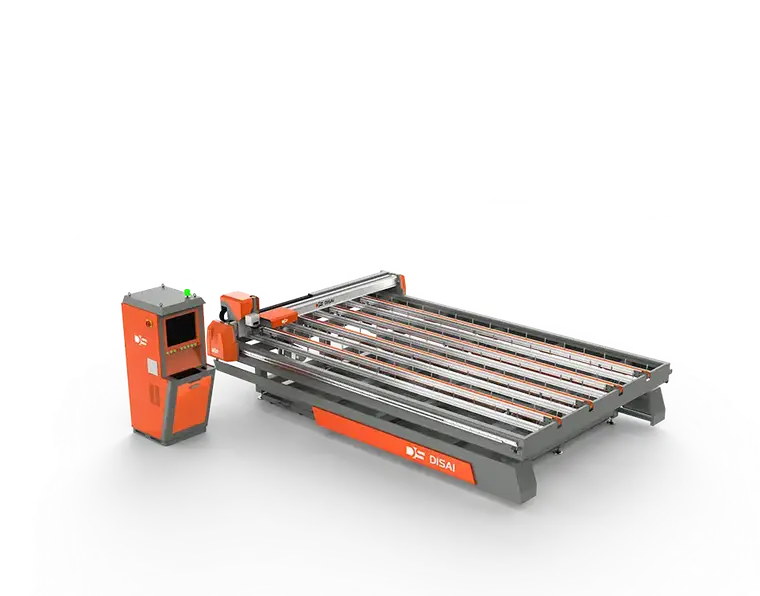
Not all CNC glass cutting machines perform equally. Fabricators evaluating equipment should focus on a few non-negotiable criteria before making a purchasing decision.
Mechanical Rigidity and the Motion System
Cutting quality depends on the stability of the frame and the precision of the motion system. A rigid gantry construction reduces vibration, which prevents micro-chips along the score line. Linear guides and servo motors with closed-loop feedback ensure the cutting wheel follows the programmed path exactly. These characteristics are difficult to retrofit, so they deserve priority during evaluation.
Software Capability and Integration
The cutting machine is only as strong as its software. Look for automatic nesting, clean DXF and DWG import, and compatibility with the ERP platforms used in the glazing industry. Ease of programming matters equally — a machine that takes weeks to master will reduce productivity regardless of its hardware specification.
Support and Aftermarket Service
Downtime is the most expensive failure mode for any CNC glass cutting machine. The manufacturer's ability to deliver rapid spare-part delivery, remote diagnostics, and on-site support is critical. DISAI glass cutting machines are backed by structured service programs aimed at minimizing production interruption, including operator training and the stock availability of wearing parts.
What DISAI Brings to CNC Glass Cutting in 2025
DISAI has established itself in the glass processing sector as a provider of cutting solutions built for daily industrial use. The DISAI approach is centered on practical reliability: machines designed to integrate with existing production lines, software that shop-floor workers master quickly, and engineering focused on the cutting quality that directly affects the bottom line.
For fabricators in 2025, the DISAI range covers a wide variety of applications, from standard flat glass cutting to more demanding configurations. The common thread is precision. Every DISAI machine is calibrated for tight tolerance cutting, consistent score pressure, and maximum sheet yield, which turns the financial benefits described above into a day-to-day reality.
Precision Is a Competitive Requirement, Not a Luxury
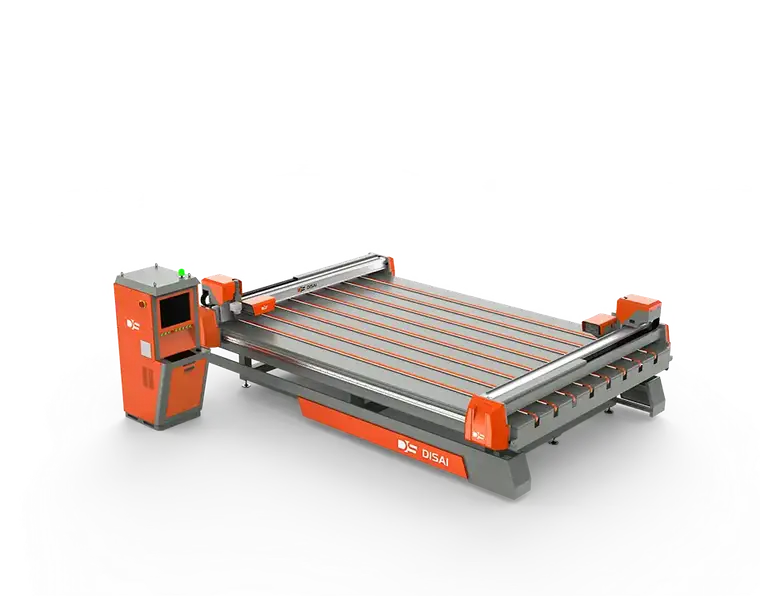
The glass market of 2025 rewards manufacturers who deliver the right dimensions, on time, with fewer rejected pieces and tighter control over material costs. Architectural trends favor large-format custom panels with shaped edges and cutouts — work that is simply not viable on a manual table. Pricing pressure demands maximum yield from every sheet. And the labor market makes skilled manual cutters harder to find and retain.
A CNC glass cutting machine, chosen carefully and supported properly, addresses all these pressures at once. The technology is mature, the business case is measurable, and the gap between facilities that have adopted it and those that have not continues to widen. For glass fabricators serious about their future, the decision is not whether precision matters — it is whether they can afford to keep working without it. In 2025, precision pays off.
Frequently Asked Questions
What glass thickness can a CNC glass cutting machine process?
Industrial CNC glass cutting machines typically process glass in the range of 2 mm to 25 mm, depending on the machine configuration. Thinner glass demands very consistent scoring pressure, while thicker glass requires higher pressure and sometimes specialized cutting heads. DISAI machines can be configured for the specific thickness mix of each customer.
How quickly can a CNC glass cutting machine pay for itself?
Payback depends on production volume, material cost, labor expense, and current waste levels. A shop running consistent shifts typically benefits quickly from reduced glass waste and improved labor efficiency. Many operators plan for a payback period of two to three years, which shortens further when material utilization improvements are tracked carefully.
Can a CNC glass cutting machine fully replace a manual cutting table?
For standard flat glass, one CNC machine can replace one or more manual cutting stations, depending on volume. Many shops keep a manual table for small custom orders or unusual glass types while channeling the majority of production through the CNC system — the split is a matter of workflow design.
Does DISAI provide training and technical support?
Yes. DISAI provides installation, operator training, spare-parts supply, and technical support as part of the customer relationship. The focus is on production uptime, so the machine reaches full productivity quickly and stays operational.