
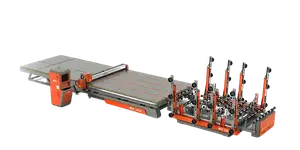

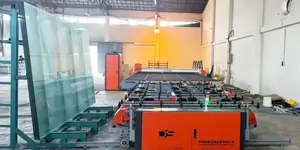
The rapid expansion of curved glass in architectural facades, automotive glazing, and premium interior products has created a new set of challenges for glass fabricators. Cutting a straight line is no longer sufficient for many projects. Curved designs demand a cutting head that can maintain precise scoring pressure while continuously changing direction, and that choice directly controls edge quality, breakage rate, and final production cost. This article compares the leading cutting head technologies available for curved glass design, examines how each performs under real production conditions, and explains the engineering logic behind selecting the right one, with practical reference to DISAI's solutions.
The Unique Demands of Curved Glass Cutting
Curved glass includes bent-tempered panels, curved laminated units, automotive sidelites, and custom-shaped shower enclosures. These products share one common challenge: the cutting head must follow a non-linear path while keeping the scoring wheel perpendicular to the direction of travel. On a straight cut, force distribution is constant and predictable. On a curve, the head experiences lateral forces that change at every point of the arc.
If the cutting head has any mechanical play, or if the pressure control system reacts too slowly, the score line becomes inconsistent. The result is micro-cracks that are invisible immediately after cutting but develop into visible chips after edge grinding, or into full breakage inside the tempering furnace. This is why the cutting head, rather than the glass itself, is often the real limiting factor in curved glass operations.
Main Cutting Head Technologies Compared
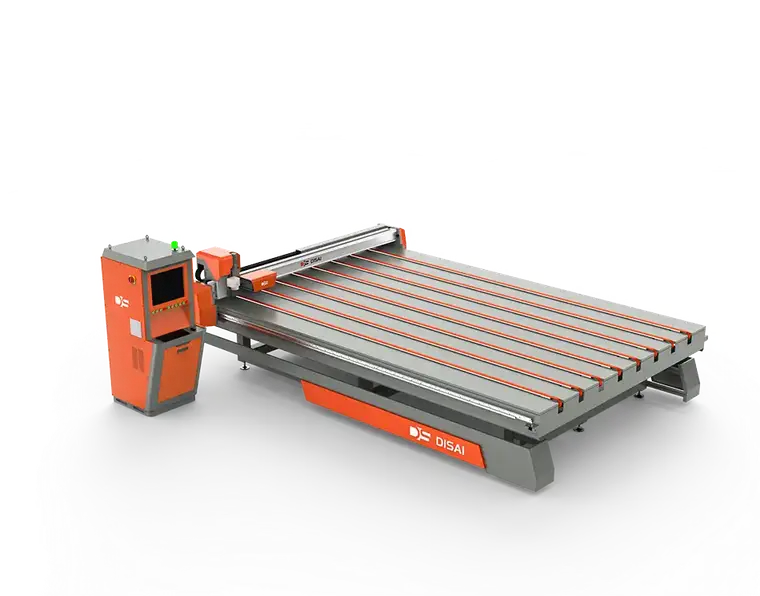
Carbide Scoring Wheels
Carbide wheels are the workhorse of the glass cutting industry. They create a clean fracture line by applying carefully controlled pressure along the glass surface. For curved glass with generous radii, a standard carbide wheel can deliver acceptable results at moderate speeds. The wheel's simple geometry also makes it inexpensive to replace and easy to maintain.
The limitation appears when the curve radius becomes tight. The contact patch between the wheel and the glass changes shape, causing under-scoring on the inner side of the curve and over-scoring on the outer side. This uneven fracture leads to edge chipping and reduced bending strength, which becomes a serious issue in tempered products where residual stress is high.
Diamond Impregnated Heads
Diamond heads are often mentioned in discussions about curved glass, but their proper role is grinding and edge finishing rather than scribing. A diamond-impregnated head removes material mechanically, which makes it suitable for thick glass over 12 mm and for shaping hardened edges. However, because diamond cutting generates heat, it can induce thermal stress in thin glass and is slower than a scoring approach for mass production.
CNC Multi-Axis Cutting Heads
The third option, and the most advanced, is a CNC-controlled multi-axis cutting head. This system combines a carbide scoring wheel with servo-driven swivel and pressure compensation. As the head follows the curved path, it continuously corrects its own angle so that the wheel remains perpendicular to the tangent of the cut. Simultaneously, the pressure control system adjusts downward force to match local glass thickness and curvature.
This combination of angular correction and dynamic pressure control is the key technical difference from fixed-angle tools. It prevents side-slipping of the wheel, eliminates uneven scoring depth, and produces a fracture line that is consistent from start to finish.
Which Cutting Head Performs Best: A Practical Comparison
To make the comparison concrete, consider the following performance criteria:
- Accuracy on tight radii: CNC multi-axis heads maintain perpendicularity throughout the arc, while fixed-angle carbide wheels begin to under-score below roughly a 300 mm radius.
- Edge quality: Dynamic pressure compensation produces smoother fracture lines, reducing the need for secondary grinding and polishing.
- Throughput: A fixed head is quicker to set up, but a multi-axis head reduces rework and rejected panels, which raises real production throughput.
- Tool life: Diamond heads last the longest, but carbide wheels offer the best cost-per-meter ratio for most curved glass applications.
- Operator dependence: CNC-controlled heads reduce reliance on operator skill, making quality consistent across shifts and operators.
The conclusion from this comparison is clear: for most curved glass designs, a CNC-controlled cutting head with a carbide wheel and real-time pressure regulation offers the best combination of precision, speed, and operating cost. It is especially powerful in volume production, where consistency matters more than the initial setup time.
Why DISAI's Cutting Heads Are Built for Curved Glass
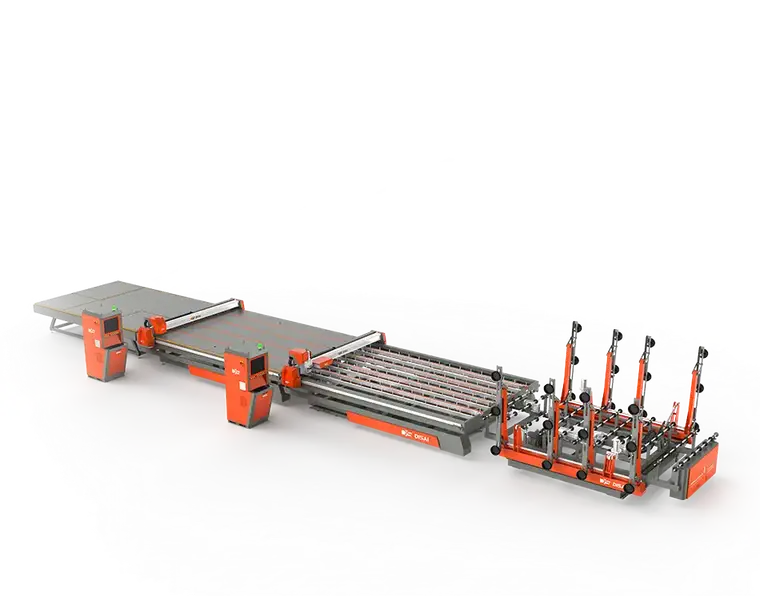
DISAI has devoted years of engineering to the specific problem of non-linear glass cutting. Our cutting head assemblies use a dual-pressure control system that reacts in real time to changes in the glass surface, rather than relying on fixed mechanical settings. This is not a theoretical concept; it has been proven in production facilities that cut curved glass on a daily basis.
One of DISAI's key differentiators is the integration of the swivel axis directly into the head housing. By eliminating intermediate linkages, the design removes the mechanical play that typically appears in multi-piece assemblies. Less play means less vibration, and less vibration means cleaner scores. For a fabricator producing curved shower panels, storefront windows, or automotive glass, this directly translates into a lower scrap rate and more stable production costs.
DISAI heads also use hardened steel bearing surfaces and full sealing against glass dust. In a cutting environment where abrasive particles are everywhere, this extends service life and reduces maintenance frequency. The combination of precision, durability, and low operating cost is what makes DISAI's cutting head a preferred selection for curved glass production lines.
Practical Selection Criteria for Your Application
If you are evaluating cutting heads for a curved glass project, here are five factors to weigh:
- Minimum radius: If your smallest radius is above 300 mm, many standard heads will work. Below that, choose a compact head with a small-diameter wheel to avoid contact inside the curve.
- Glass thickness: Thick glass over 12 mm benefits from a heavier-duty head with higher downward force capacity. Thin glass from 2 to 4 mm requires very fine pressure control to avoid breakage along the score line.
- Cutting speed: High-speed production needs active pressure compensation that prevents the wheel from lifting off during rapid direction changes.
- Machine integration: Verify that the head mounting interface and control signals are compatible with your existing cutting table.
- Spare parts and support: A cutting head is a wear component. Check the availability of replacement wheels and seals, and the responsiveness of technical support, because this directly affects your total cost of ownership.
Conclusion
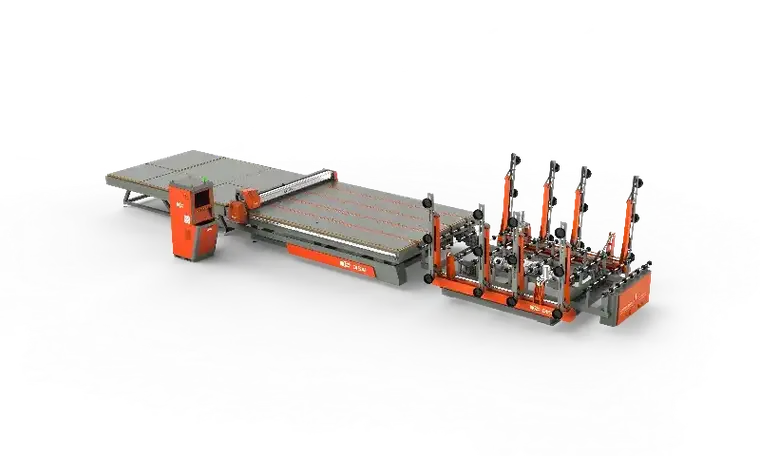
There is no single “best” cutting head that fits every curved glass operation; the right choice depends on your product geometry, production volume, and quality requirements. However, the technical evidence consistently points to CNC-controlled multi-axis heads with carbide wheels as the strongest all-around solution. Their ability to maintain perpendicularity and adjust pressure dynamically addresses the root causes of chipping and breakage in curved cuts.
DISAI's cutting heads are engineered around exactly these principles and have been validated across a wide range of curved glass applications. Whether you are entering the curved glass market or looking to reduce reject rates in an existing line, DISAI can help you match the right cutting head to your cutting table and your product specification.