
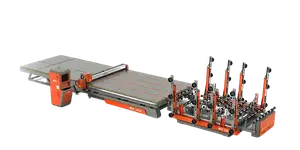

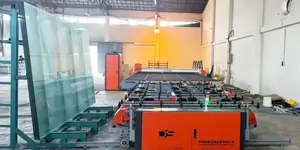
For decades, a single question has haunted glass fabricators, contractors, and DIY enthusiasts alike: Can tempered glass be cut? The answer, as with most things in materials engineering, is not a simple yes or no. Scattered across the internet are cautionary tales of exploding sheets, but also claims of miracle tools that can "score and snap" tempered glass with ease. The reality is far more structured. In this article, we separate what is myth from what modern machinery can genuinely achieve, and how companies like DISAI are redefining the limits of glass processing.
The Myth: Tempered Glass Can Be Scored and Snapped Like Standard Glass
One of the most persistent misconceptions is that tempered glass behaves like annealed glass when scored with a carbide cutter. The logic sounds reasonable: both are glass, both can be scratched, so why shouldn't both break along a score line?
In practice, attempting to score and snap fully tempered glass results in near-instant fragmentation. The entire sheet bursts into the small, pebble-like pieces that tempering is designed to produce on impact. The reason lies in the very process that gives tempered glass its strength — a point we will examine in the next section.
The Physics Behind the Shatter: Internal Stress Is the Enemy of Cutting
Tempered glass is created by heating annealed glass to approximately 620°C, then rapidly cooling its surfaces with high-pressure air jets. This controlled thermal shock creates a state of differential stress: the exterior surfaces are in deep compression, while the interior core remains in tension. This stress balance is precisely what makes tempered glass approximately four to five times stronger than annealed glass of the same thickness.
However, this same stress balance is what makes post-tempering cutting impossible. When a cutting wheel penetrates the compressed surface layer, it creates a crack that immediately propagates through the tension zone. The stored energy releases explosively, and the glass shatters. It is not a matter of technique, tool quality, or operator skill — it is fundamental physics. No handheld tool, no amount of "specialized scoring," can overcome this limitation.
Machine Reality: What Modern Technology Can Actually Achieve
If traditional cutting is physically impossible, what do we mean by "machine reality"? In professional glass processing, the answer is twofold: specialized high-pressure waterjet systems that sometimes work on tempered glass, and — far more commonly — CNC cutting systems that process glass before it enters the tempering furnace. Both approaches deserve careful examination.
Waterjet Cutting: The Exception with Real Limitations
Abrasive waterjet cutting uses a high-pressure stream of water mixed with garnet abrasive to erode material. It applies no point load to the glass surface, which means it can, in theory, cut through tempered glass without triggering the explosive stress release. Some facilities do use waterjets to modify tempered glass panels, particularly for flat sheets where the cut edge does not carry structural load.
But significant caveats remain. The waterjet cut creates a new edge that interrupts the compressive stress layer. This localized stress alteration can lead to micro-cracks, and the panel's overall structural integrity is permanently compromised. In many building code environments, cutting tempered glass post-production voids its certification and creates a liability issue. For load-bearing or safety-critical applications, this is rarely acceptable.
CNC Cutting Before Tempering: The Professional Standard
The industry-standard solution is refreshingly simple: cut, drill, and edge-process the glass in its annealed state, then temper it afterward. This workflow preserves all the strength and safety benefits of tempering while achieving "final shape" accuracy. The challenge is in the precision — a sheet that is cut and drilled before tempering must meet exact final dimensions, because after tempering, no corrections are possible.
This is where advanced CNC machinery, such as DISAI's cutting and processing systems, earns its place on the production floor.
Comparing Approaches: Manual Tools, Waterjet, and CNC Pre-Tempering Systems
To understand the landscape clearly, consider the following comparison:
- Manual glass cutters: Ineffective on tempered glass, shatter risk high, zero precision. Only viable on annealed or heat-strengthened glass.
- Waterjet cutting: Possible on tempered glass in limited conditions, but compromises structural integrity, creates a fragile edge, and voids most certifications.
- CNC cutting before tempering: The only method that preserves full strength, allows complex shapes and precise holes, and integrates with automated production.
For any operation that fabricates glass for doors, facades, shower enclosures, or table tops, the CNC pre-tempering approach is the only realistic path to both precision and safety.
How DISAI Precision Systems Redefine the Workflow
DISAI has built its reputation on addressing the exact pain point this myth-riddled topic creates. Instead of asking the wrong question — "how do I cut tempered glass?" — DISAI's engineering focuses on the right one: "how do I make the pre-tempering process so precise that no post-cutting is ever needed?"
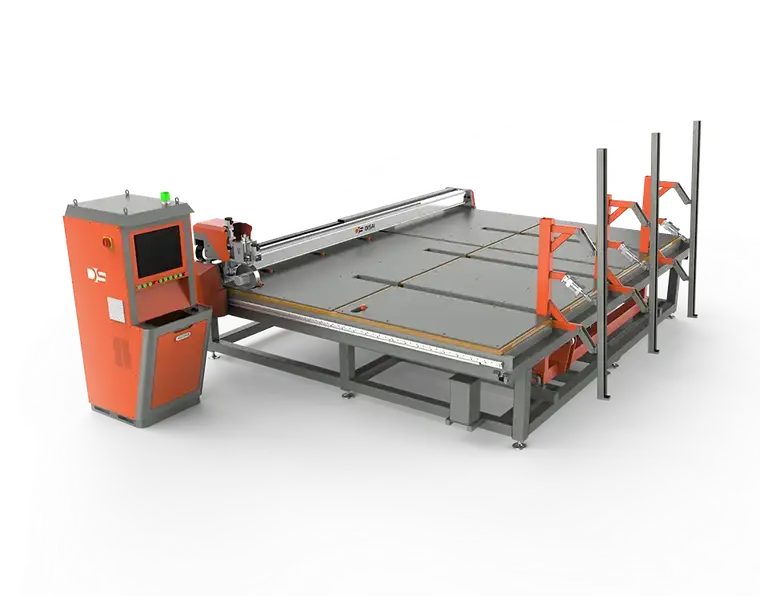
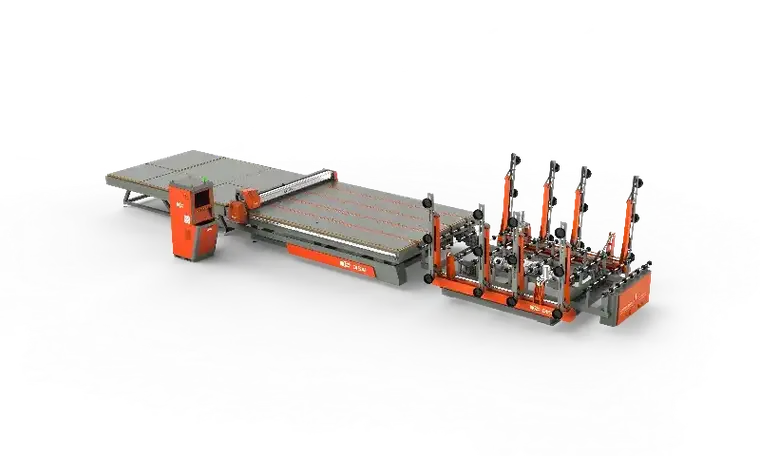
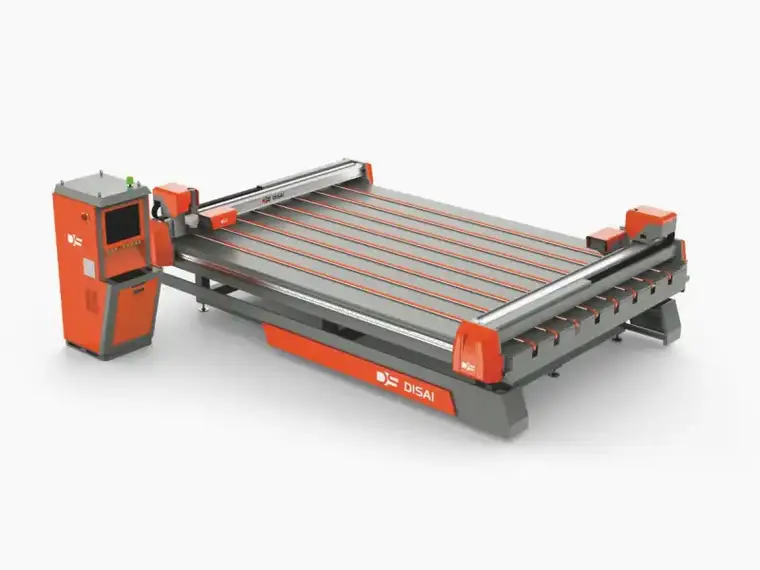
DISAI cutting tables combine automatic sheet loading, high-speed CNC scoring, and integrated milling and drilling capabilities. The result is a fully processed panel that leaves the machine ready for tempering — with hole positions, edge profiles, and dimensions held to tight tolerances. This approach:
- Eliminates the temptation to perform risky post-tempering modifications.
- Reduces waste by ensuring that no material is lost to failed cutting attempts.
- Accelerates production by automating the entire fabrication step before the furnace.
- Ensures compliance with safety standards, because the glass is never structurally compromised after tempering.
Practical Advice for Fabricators and Buyers
Before you invest time or money in cutting tempered glass, take these steps:
- Determine whether the glass is actually fully tempered. Heat-strengthened or annealed glass may be cut with traditional methods, but fully tempered glass cannot.
- Never attempt machining on tempered glass without a waterjet system and a full understanding of the structural consequences.
- If you need custom shapes, holes, or notches, design them into the pre-tempering process from day one.
- Choose a cutting system — like those offered by DISAI — that supports your workflow from cutting table to furnace.
Conclusion: The Myth Ends Where Engineering Begins
The myth that tempered glass can be cut with the right tool or technique is exactly that — a myth. The tempered glass that leaves the furnace is a finished product, and the only professional way to "cut" it is to process the glass before tempering. Modern machinery makes this not only possible but highly efficient. DISAI's precision cutting systems give fabricators the power to deliver complex, exacting glass components with confidence — no exploding sheets, no compromised edges, no forfeited safety certifications. The reality is simple: the machine that cuts your glass should work before the tempering furnace does.