



Uneven glass cuts are among the most frustrating problems in glass fabrication. A slight deviation along the score line can lead to chipped edges, rough breakouts, or outright breakage — wasting material and reducing production efficiency. Whether you operate a manual scoring table or an automated CNC glass cutting machine, the culprit is rarely the glass itself. Most uneven cuts stem from a handful of adjustable parameters that you can correct quickly without replacing expensive components. In this guide, we walk you through the most effective adjustments to restore clean, straight, and reproducible cuts.
Why Do Uneven Cuts Occur? The Root Cause Checklist
Before making any adjustments, it is essential to understand what is happening at the interface between the cutting wheel and the glass surface. Uneven cuts typically fall into three categories: inconsistent scoring depth, lateral deviation from the intended line, and irregular breakouts. Each has its own set of root causes.
Scoring Depth Variations
If your score line varies in visibility — sometimes deeper, sometimes shallower — the pressure applied by the cutting wheel is unstable. Pressure fluctuations can come from pneumatic regulators, mechanical springs, or even a slightly worn spindle bearing. A consistent, controlled pressure is the single most important factor in producing a uniform score.
Lateral Deviation (Wandering Cut)
When the cutting wheel veers off a straight path, check the alignment of the guide rails and the wheel carriage. For manual cutters, a warped straightedge or a loose guide bar will cause the wheel to drift. For CNC machines, excessive play in the linear guides or a worn motor coupling can produce the same symptom.
Poor Breakout Quality
Sometimes the score itself looks perfect, but when the glass is snapped, the edge veers off. This often relates to the condition and angle of the cutting wheel, insufficient cutting oil, or inappropriate cutting speed.
Quick Adjustments: Step-by-Step to Straight Cuts
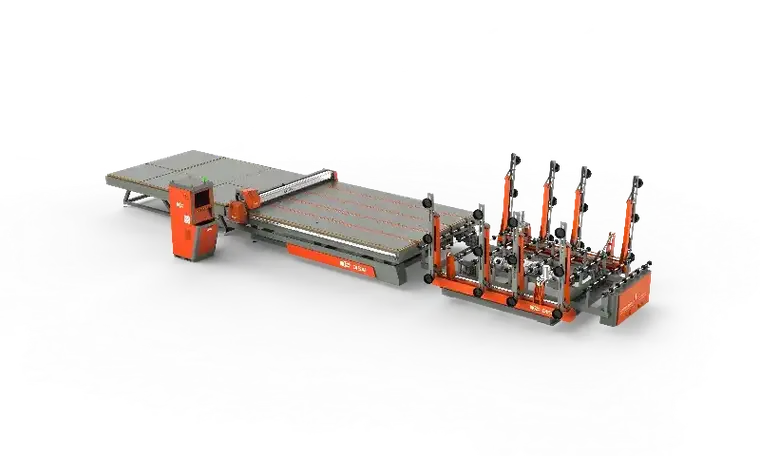
Below are the adjustments you should implement in order of simplicity and impact. Most take less than ten minutes and require only basic hand tools.
1. Adjust Cutting Wheel Pressure
The most common cause of uneven cuts is incorrect score pressure. If the pressure is too low, the score is shallow and the crack may veer. If too high, the glass might chip, or the wheel may generate excessive lateral stress. Start by checking your recommended pressure range — usually measured in Newtons or pounds. For 4mm float glass, for example, a typical range is 10–14 N. Use a calibrated pressure gauge if your machine has one. On manual scorers, tighten or loosen the spring tension knob in small increments and test on scrap glass. The goal is a smooth, faint but continuous score line with no glass dust.
2. Check Cutting Wheel Condition and Angle
A dull or nicked wheel will not produce a clean score. Replace the wheel if it has been in service for more than 40,000–50,000 linear meters. Also, verify that the wheel angle matches the glass thickness. Standard wheels are 135° for thin glass (2–3mm), 150° for 4–6mm, and 160° for glass over 8mm. An incorrectly sized wheel will cause the score to branch off, leading to uneven breaks.
3. Stabilize Cutting Oil Delivery
Cutting oil is not a luxury; it is critical for preventing micro-cracks and reducing friction. Uneven oil coverage can cause the wheel to bounce or stick, leading to a broken score line. Check the oil nozzle for blockages and adjust the flow rate so that a thin film of oil trails the wheel at all times. If your machine uses a drip system, clean the reservoir and replace the filter. For manual work, a simple felt pad saturated with kerosene-based oil can be adequate.
4. Align the Guide Rails and Carriage
Lateral deviation is almost always a mechanical alignment issue. On a manual cutter, place a known straight edge against your guide bar and check for gaps with a 0.02mm feeler gauge. If you find any, loosen the guide bar clamps and re-set the bar. On CNC machines, check the linear guides for dirt or dents. Wipe them clean and re-apply low-friction grease. Also, check the wheel holder's vertical axis — it must be perfectly perpendicular to the glass surface. Even a 0.5-degree tilt can cause the score to drift.
5. Adjust Cutting Speed
Cutting speed interacts with pressure and oil. If you've corrected both and still see uneven scores, try reducing the speed by 15–20%. Faster speeds demand higher pressure, which can cause the wheel to deflect. Conversely, very slow speeds can cause the oil to dissipate before the crack forms. Find your machine's sweet spot by cutting a test line at multiple speed settings and measuring the breakout angle.
Testing Your Adjustments: The 3-Line Verification Method
After any adjustment, do not immediately run a full production batch. Use this simple verification method to confirm the fix.
- Cut three parallel lines on a scrap piece of the same glass thickness: one at low pressure, one at your current setting, and one at slightly higher pressure.
- Break all three sheets along the score. The correct setting should produce a straight edge with no deviated chips.
- Measure the breakout angle (the angle between the top surface and the cut edge). A healthy break shows a smooth, consistent angle of about 90° with no small secondary cracks.
If all three tests show unevenness even after adjustment, the problem may lie in the glass itself — for example, internal stresses or surface contamination. But more often than not, these five adjustments resolve the issue.
When Adjustments Aren't Enough: Upgrading Your Cutting System
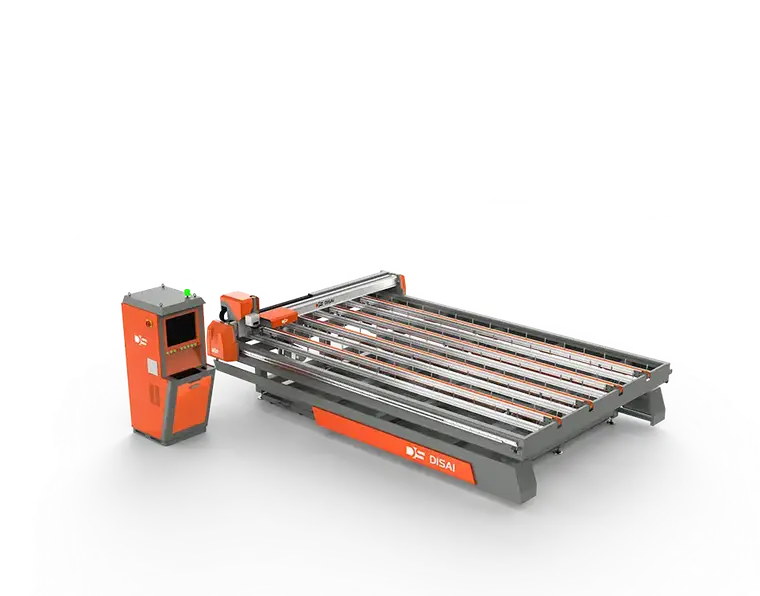
Sometimes the root cause of uneven cuts is not a simple setting but the physical limits of your equipment. Over time, worn linear guides, aging servo motors, or a deteriorated cutting head assembly make precise adjustment impossible. If you find that you need to re-tune the machine every few days, or if cutting speed must be kept below production targets to maintain quality, it may be time to consider upgrading to a more robust cutting system.
At DISAI, we specialize in precision glass cutting machines designed with rigid gantry frames, high-precision linear guides, and closed-loop pressure control that holds your scoring force within +/-0.2 N. Our systems include an automatic wheel angle calibration feature and an optional cutting oil monitoring system that eliminates the variables most commonly responsible for uneven cuts. For fabricators who are facing persistent quality issues, DISAI's technical team will audit your current process and recommend the most cost-effective upgrade path — whether it's a retrofitted cutting head or a complete CNC cutting table.
In summary, fixing uneven cuts starts with a systematic check of pressure, wheel condition, oil coverage, alignment, and speed. The vast majority of cases can be resolved in under an hour with no new parts required. But when the problem recurs, or when machine age starts to compromise productivity, consider whether a precision upgrade from DISAI is the smarter long-term investment.
Frequently Asked Questions
What pressure should I use for 6mm glass?
A general starting point is 15–18 N for 6mm annealed glass with a 150° wheel. Always test on a sample and adjust in 1 N increments until the score is consistent.
Can a dull cutting wheel cause uneven cuts?
Yes. A dull wheel requires higher pressure, which increases lateral forces and can cause the score to wander. Replace wheels at the recommended service interval.
How often should I clean the guide rails?
On a daily basis, wipe the rails with a lint-free cloth and a small amount of solvent. Apply fresh grease every 100 operating hours to prevent uneven movement.
Does DISAI offer training on cutting adjustments?
Yes. DISAI provides commissioning and on-site training with every machine, along with a complete adjustment manual. We also offer remote video support during business hours.
With the right adjustments and a disciplined testing protocol, uneven cuts can be eliminated from your production line. Start with these quick fixes, document your results, and you will see immediate improvements in yield and edge quality.