

Every workshop that works with glass knows the frustration of a score that drifts off its line. What starts as a small deviation at the cutting edge becomes a ruined panel by the time you break it. A straight-line glass cutter exists to eliminate that variable. Instead of relying on the steadiness of a hand and eye, this tool mechanically controls the cutting wheel's path, pressure, and depth. For workshop owners deciding between adding more hand tools or upgrading to better equipment, the straight-line glass cutter sits squarely in the second category—a practical investment that changes your workflow, not just your inventory.
The Hidden Cost of Hand Scoring
Hand-cutting glass with a manual cutter feels efficient at first. There is no setup time, and an experienced operator can move quickly. But when you track the full cost of hand scoring, the picture changes dramatically over a full production shift.
Inconsistent Pressure, Inconsistent Results
Manual scoring depends on the operator's arm strength, hand angle, and fatigue level. A score that is too shallow won't break cleanly. A score that is too deep creates micro-chipping along the edge, which shows up after tempering or lamination. Both outcomes lead to scrapped glass and rework orders that eat into your margin.
Misaligned Lines Multiply Waste
The longer the cut, the more visible the drift. A hand-cut line on a 3-meter sheet of glass can wander by a millimeter or more at the far end. That millimeter seems small until you're cutting to tight tolerances. In real production, even a skilled operator will generate occasional off-angle pieces that cannot be used in finished goods.
When manual scoring error typically accounts for between 2 and 5 percent of wasted material per shift—depending on operator experience—the annual cost becomes significant. Material that could have become a finished product instead goes straight into the scrap bin, and that cost compounds every single working day.
What a Straight-Line Glass Cutter Brings to Your Workshop
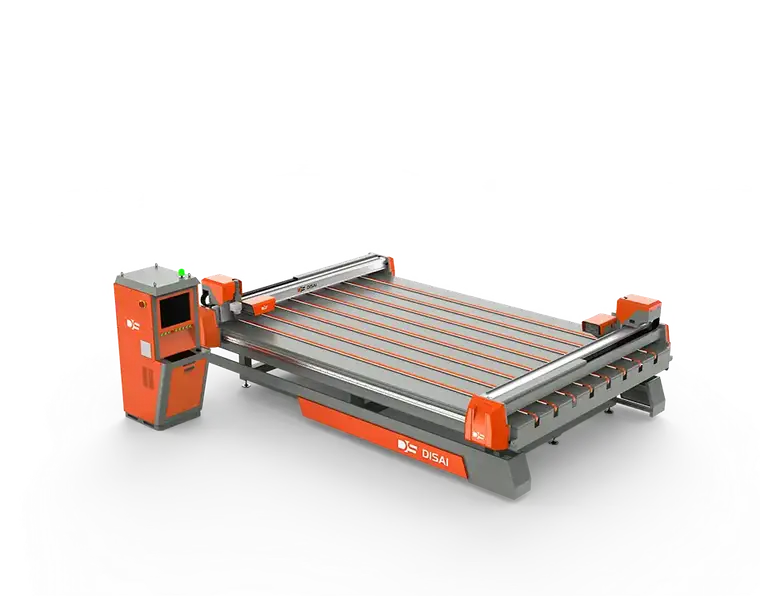
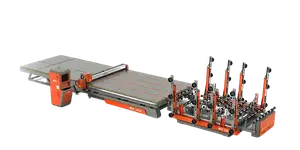
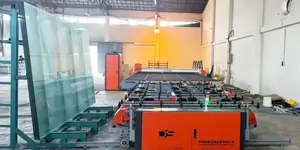
A straight-line glass cutter is not a complex machine. It is a precisely engineered guide system that mounts a scoring head on a rigid beam or rail. The glass slides beneath it, or the head moves across the glass, holding a consistent angle and cutting pressure through the entire length of the score.
Mechanical Consistency Replaces Manual Judgment
The cutting head uses a carbide or diamond scoring wheel, mounted at a fixed angle. The pressure is set once and does not change while cutting. That means the score depth is uniform from start to finish, regardless of who operates the machine or how long they have been on shift. Results no longer vary between the first cut of the morning and the last cut before lunch.
Straightness Is Guaranteed by the Beam
Because the cutting wheel is constrained by a rigid, straight guide, there is no operator-induced drift. The line you set at the start is the line you get at the end. For workshops producing window units, display cases, tabletop glass, or any product where a square edge is non-negotiable, this is the core value of the tool.
A Lower Skill Threshold
When your cutting quality no longer depends on the experience of a single senior operator, your workshop becomes more resilient. If your best cutter is out sick, a straight-line cutter keeps the production line moving. New staff can be trained in hours rather than months and still produce professional results that meet quality standards.
Key Advantages Over Manual Cutting: A Direct Comparison
- Scoring accuracy: Manual cutting depends on the steadiness of the operator; a straight-line cutter holds the same line every cycle. This reduces off-measure panels to near zero.
- Edge quality: A uniform score depth means a clean break with fewer chips on the edge. Less edge damage means less time spent grinding and polishing before further processing.
- Breakage rates: Inconsistent scoring is the root cause of most breakage during the snapping stage. A straight-line cutter lowers the breakage rate, which directly lowers total material cost.
- Throughput: Once the work stop and fence are set, a straight-line cutter is faster for repeated cuts than marking and hand-cutting each piece. The operator positions the glass, cuts, and moves on without pausing to re-measure.
- Operator burden: Manual cutting requires physical pressure and careful body positioning all day long. Straight-line cutting reduces fatigue, improving focus and safety during the rest of the shift.
Selecting the Right Straight-Line Glass Cutter
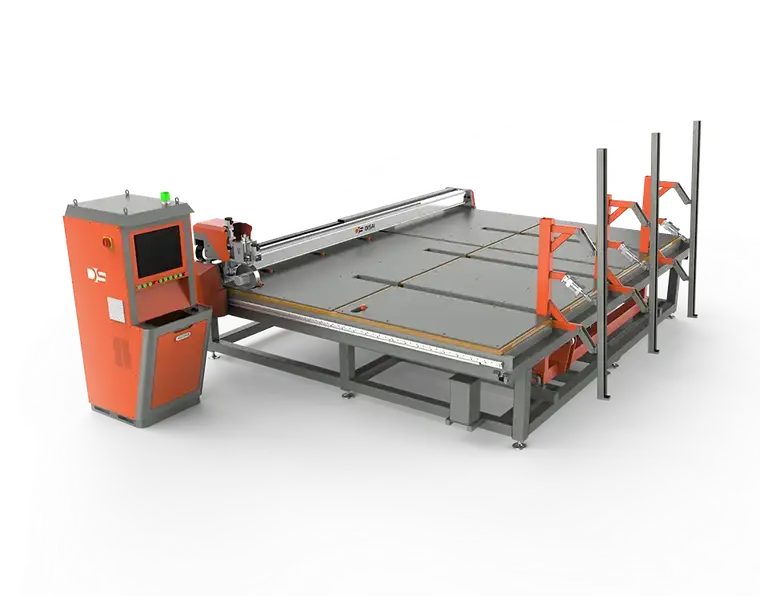
Not every cutter is suited to every workshop. Before you purchase, assess the range of glass thickness, sheet sizes, and daily volume that your operation needs to handle. Getting the specification right the first time is essential.
Cutting Length and Work Table Size
Measure your largest standard glass sheet and buy a cutter that comfortably exceeds that dimension. Cutting capacity is the one specification you cannot upgrade later. If you regularly process large architectural glass, size matters more than any other feature.
Scoring Wheel Quality
The cutting wheel determines the quality of the edge. Carbide wheels are standard and economical for float glass up to around 6 mm. Diamond wheels last longer and deliver better performance on hardened or coated glass above that thickness. The wheel should be replaceable and held in a head that allows a precise, repeatable cutting angle.
Adjustment and Repeatability
Consider how the glass is squared before each cut. A fixed fence with a scale speeds up repeat cuts. A cutting head that can be re-positioned along a calibrated beam reduces setup time between different dimensions. The more frictionless the movement, the more consistent the scoring speed—and scoring speed directly affects cut quality.
Robust Construction and Support
A straight-line cutter is a daily-use tool. The beam, rails, and bearing systems must withstand continuous sliding and contact with abrasive glass dust. Companies like DISAI have built a reputation in this segment for offering cutters with reinforced frames and reliable cutting heads that maintain calibration over long production runs. When evaluating suppliers, ask about the availability of spare parts—cutting wheels, bearings, and pressure springs—because downtime waiting for a replacement component is downtime you do not want.
Build the Return on Investment
The upfront price of a straight-line glass cutter is higher than a manual hand cutter, but the return is easy to calculate. Take the value of the glass your workshop processes in a month, multiply by a realistic waste-reduction rate of two or three percent, and compare that to the machine's price. For many workshops, the machine pays for itself within six to twelve months. After that, it starts generating profit from material saved, faster throughput, and reduced rework.
If you are still cutting glass entirely by hand, the question is not whether you can afford a straight-line cutter—it is whether you can afford to keep sending good glass to the scrap bin because of manual error.
Summary
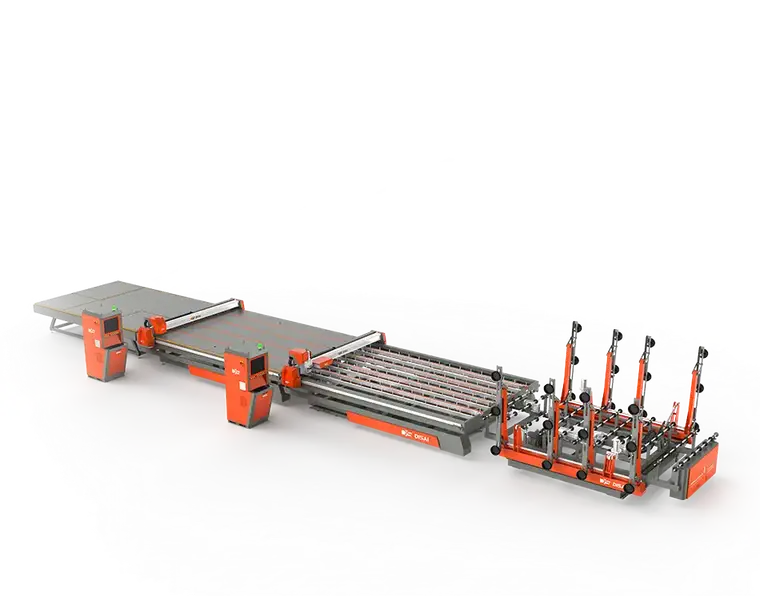
A straight-line glass cutter moves your workshop from relying on operator skill to relying on mechanical precision. It lowers waste, raises edge quality, speeds up repeated cutting, and reduces the training burden on your team. For any workshop that cuts glass regularly, it is one of the most practical upgrades available. When you are ready to evaluate specific models, a supplier like DISAI can help you match the cutter size, head type, and scoring wheel to the glass products you actually produce.