
Choosing between a manual glass cutter and a CNC glass cutting machine is not merely a matter of tool preference — it is a financial decision that affects your operation's labor costs, material yield, production speed, and long-term scalability. Glass fabricators, window manufacturers, and specialty glass workshops face this exact crossroads when expanding capacity or replacing aging equipment. This cost-benefit analysis examines both cutting methods across investment, operational expenses, quality control, and return on investment, so you can determine which route makes sense for your business size and production goals.
Understanding the Core Differences Between Manual and CNC Glass Cutting
Before diving into costs, it is essential to define what each technology involves, because the difference extends far beyond the machine itself.
The Manual Glass Cutter: Craft and Operator Dependency
A manual glass cutter is a handheld tool fitted with a tungsten carbide or diamond cutting wheel. The operator scores the glass surface by hand, then applies pressure along the score line to separate the panel. While simple in construction, the tool demands substantial skill. The operator controls cutting pressure, speed, and angle — variables that directly influence edge quality and break-out accuracy. For high-mix, low-volume workshops producing one-off pieces or custom shapes, this flexibility is valuable. But when production scales up, the lack of repeatability becomes a bottleneck.
The CNC Glass Cutting System: Automation and Precision
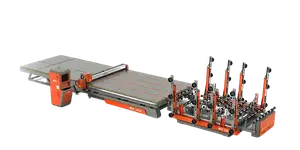
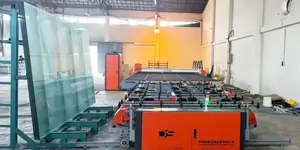
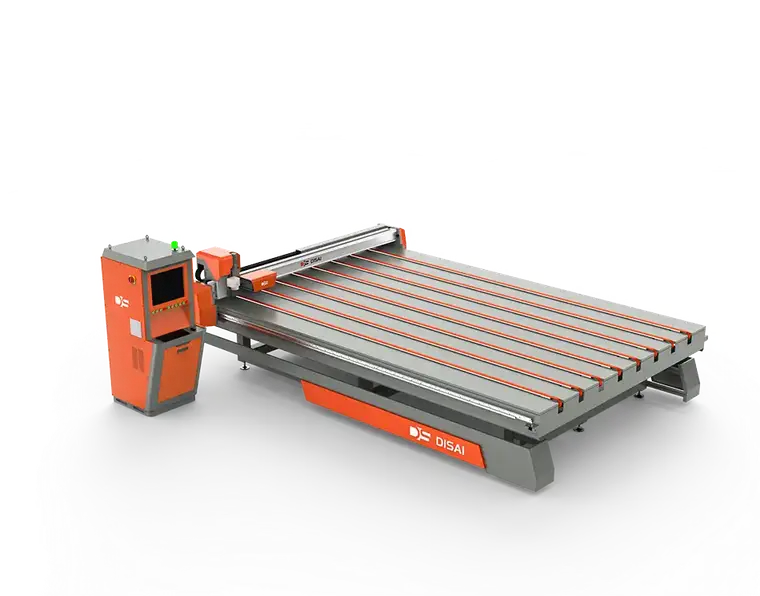
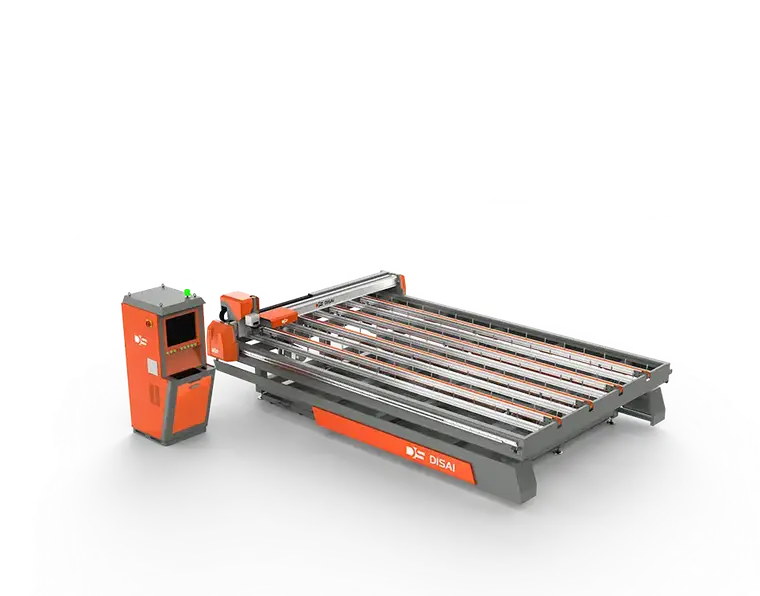
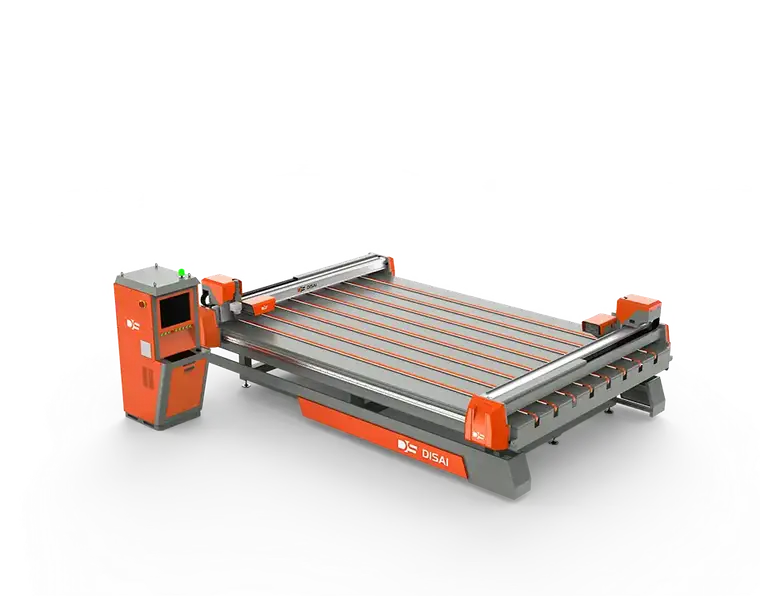
A CNC glass cutting machine automates the scoring process. A computer-controlled bridge moves the cutting head over a flat table, following programmed shapes with high precision. Modern systems integrate optimization software that arranges parts on a glass sheet to minimize waste, and the machine can be reprogrammed and set up for a new job in minutes. The human role shifts from executing the cut to loading and unloading glass and managing the cutting schedule.
Upfront Investment: What Does Each Option Cost?
The initial capital outlay is the first and most obvious differentiator between the two approaches.
- Manual glass cutters typically cost from a few hundred to several thousand dollars, depending on brand, wheel quality, and whether the tool is handheld or a straight-line bench cutter. This makes them accessible to small workshops with limited capital.
- Semi-automatic straight-line cutting machines occupy a middle ground, typically priced from a few thousand to tens of thousands of dollars, and are suited for businesses producing standardized rectangular panels.
- Full CNC glass cutting tables represent a substantially higher investment, often in the five-to-six-figure range depending on table size, axis configuration, software suite, and automation features such as conveyor loading or break-out tables.
While the gap in purchase price is undeniable, it is dangerous to base the decision on the purchase price alone. The operational cost structure of each option diverges just as significantly.
Operational Cost Breakdown: Labor, Waste, and Efficiency
Labor Costs and Skill Requirements
Manual cutting is labor-intensive. A team of three to five skilled glass cutters may produce what one CNC operator and a helper can handle on a single machine. Skilled manual cutters command higher wages because their experience determines the quality of the final product. Additionally, the physical strain of scoring and breaking glass leads to fatigue, which visibly reduces productivity in the final hours of each shift.
A CNC system shifts the burden. One operator can supervise the machine, perform basic maintenance, and manage the cutting program. The required skill set becomes program management rather than manual dexterity. This not only reduces labor costs per square meter of glass but also reduces dependence on key staff, whose departure can disrupt production for weeks.
Material Utilization and Waste
Glass is an expensive raw material, and scrap rate has a direct effect on profitability. Manual cutting produces uneven offcuts, because even an experienced human cutter cannot consistently achieve optimal nesting in real time. As a result, waste rates tend to be higher, and complex shapes frequently leave offcuts too small for further use.
CNC machines with integrated optimization software arrange every piece within the sheet to maximize yield. Many fabricators report material savings of 5 to 10 percent after switching from manual to CNC — a figure that, in high-volume environments, can eclipse the machine's monthly financing cost. When annualized across the total volume of glass processed, this improvement alone often justifies the premium investment.
Production Speed and Throughput
Here, a clear hierarchy emerges:
- Manual cutting is constrained by the physical speed of the operator. Each piece must be measured, marked, scored, and broken — a cycle that takes minutes per panel even with an experienced cutter.
- CNC cutting scores an entire sheet continuously, pausing only for glass loading and unloading. This represents a fundamental leap in throughput, and a CNC table can process a full day of manual team output in a fraction of the time, without overtime pay or shift differentials.
Quality Consistency and Customer Retention
In glass fabrication, dimensional accuracy is non-negotiable. Installers of windows, shower enclosures, and furniture glass expect edges to align and shapes to match within tight tolerances — typically ±0.5 mm or better for finished products.
Manual cutting relies entirely on the operator's steady hand and precise measurement. While an expert can achieve good results, fatigue, distraction, and everyday variability inevitably cause defects. Each rejected pane costs not only material but also re-cutting labor and delivery delays that damage client relationships.
CNC machines deliver repeatable, programmable accuracy within ±0.1 to ±0.3 mm. The same design file produces identical parts every time, making it significantly easier to comply with quality audits, supply large commercial projects, and build the kind of reliability that secures long-term contracts.
Long-Term ROI and Break-Even Considerations
The term "break-even" is often misunderstood in the glass cutting context. It is not simply the point where cumulative savings equal the purchase price. A more practical calculation includes several factors:
- Labor savings per month — the difference in headcount and wages between the manual team and the CNC operating team.
- Material savings per month — reduced glass waste from optimized nesting.
- The value of additional production capacity, which enables more revenue.
- Reduction in defect-related costs, including re-cutting and customer penalties.
For a mid-sized fabrication company processing 40–60 square meters of glass per day or more, the combined savings across these four factors frequently result in a payback period of 12 to 18 months for a CNC system. For smaller workshops cutting fewer than 10 square meters daily, the payback window stretches considerably, and manual equipment may be fully justified.
There is also a hidden long-term cost to manual cutting: the difficulty of finding and retaining skilled glass cutters. The trade relies on an aging workforce, and in many regions, recruiting a capable manual cutter is harder than recruiting machine operators. This labor scarcity is accelerating the shift toward automated solutions even among smaller fabricators who historically remained manual.
Which Option Fits Your Business: A Decision Framework
The answer is not uniform. Begin by auditing your own operation:
- What is your average daily or monthly cutting volume?
- How complex are the shapes you need to produce?
- What is your current defect and waste rate?
- How concentrated is your skilled-labor risk?
- What is your growth plan for the next two to three years?
If your volume is low, your shapes are predominantly straight-line rectangles, and your labor situation is stable, a manual or semi-automatic cutter will keep fixed costs low and flexibility high. As volumes rise, shape complexity increases, or skilled cutters become scarce, the economic case for CNC strengthens decisively.
DISAI CNC Glass Cutting Solutions
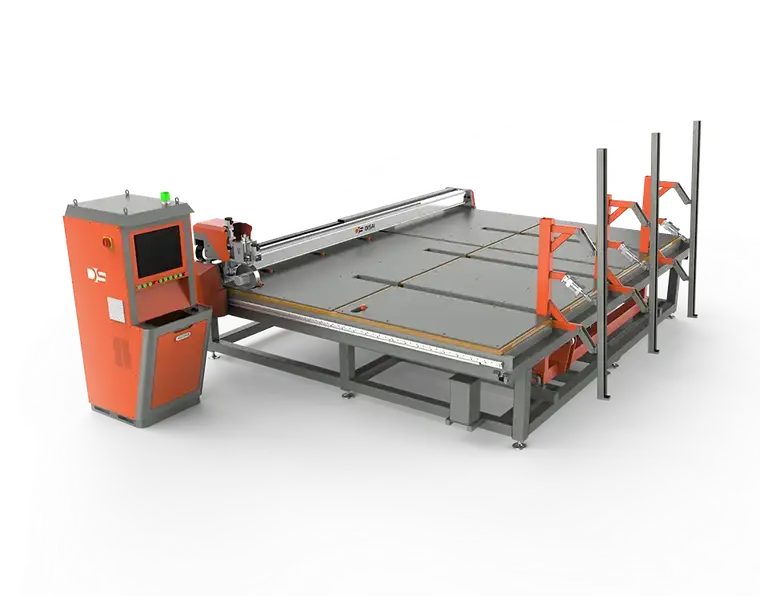
For businesses ready to move beyond manual cutting, DISAI offers a range of CNC glass cutting tables engineered for precision, efficiency, and reliable operation. DISAI systems combine high-rigidity bridge structures, precise servo-controlled axes, and user-friendly optimization software, enabling fabricators to transition smoothly from manual workflows to automated production. Whether the goal is reducing waste, accelerating throughput, or freeing skilled workers for value-added tasks, DISAI supports every customer with installation guidance, operator training, and responsive after-sales service — factors that materially affect how quickly the investment begins to pay back.
Frequently Asked Questions
Is a CNC glass cutting machine worth it for a small workshop?
If the workshop expects to grow, or if current waste rates are high, CNC can pay for itself faster than many small business owners assume. A detailed calculation using your own labor and material numbers is essential before making a commitment.
Can a CNC machine replace multiple manual glass cutters?
Yes. In most production settings, a single CNC table produces as much as three to five manual cutters while holding more consistent tolerances and requiring only one operator.
How long does it take to learn CNC glass cutting?
For a competent operator, basic programming and machine operation can be learned within days. Accurately optimizing cutting layouts and maintaining the machine may take several weeks of practice, but this is considerably faster than the years required to master manual glass cutting.
What factors most influence the break-even period for CNC glass cutting equipment?
Glass purchase volume, defect rate, labor costs, and machine utilization rate are the primary drivers. The more hours a machine runs and the more material it processes each day, the shorter the payback period becomes.