

Selecting the right glass cutter parts is a decision that directly affects cutting accuracy, tool lifespan, and overall operational cost. While top-brand components carry a reputation for precision and durability, generic alternatives are increasingly common and often significantly cheaper. For workshop managers, maintenance technicians, and professional glaziers, the question is not simply “which works better?” but rather “which is the right choice for a specific cutting task?” This guide provides a structured comparison of top-brand and generic glass cutter parts, focusing on measurable differences in materials, tolerance, compatibility, and long-term value — and explains how DISAI offers a balanced solution for businesses that need reliability without overpaying.
Understanding Glass Cutter Parts: The Basics
Before comparing brands, it is essential to understand what constitutes a glass cutter and which parts typically need replacement. A standard glass cutter consists of a handle, a hardened cutting wheel, a holding screw or axle, and in some models, a reservoir for cutting oil. The cutting wheel is the most critical wear component: it scores the glass surface, creating a controlled fracture line. The axle and bearing surfaces determine how freely the wheel rotates, which in turn affects the consistency of the score. Handles are less critical mechanically but must provide ergonomic control and secure attachment for the cutting head.
Why Parts Quality Matters
Glass cutting is an operation where small differences in geometry or hardness produce visible results. A wheel that is slightly off-center, an axle with excessive play, or a steel alloy with suboptimal grain structure will cause erratic scoring, chipping, or premature wheel dulling. For production environments where thousands of cuts are made daily, consistency is not a luxury — it is a requirement. This is why the material specification and manufacturing tolerance of every component matter for the overall performance.
Top-Brand vs. Generic Parts: A Side-by-Side Comparison
To make an informed decision, it is helpful to evaluate both options across the dimensions that affect your shop floor. The following list summarizes the key differences between typical top-brand and generic glass cutter parts.
- Material quality: Top-brand wheels are usually made from premium tungsten carbide or polycrystalline diamond with tightly controlled grain size. Generic wheels may use a lower-cost carbide blend that is less uniform, leading to faster wear and more frequent wheel changes.
- Precision tolerance: Leading manufacturers specify wheel runout and axle bore tolerances within a few microns. Generic parts often operate with looser tolerances, which can cause the score line to waver under heavy pressure.
- Compatibility with existing tools: Top-brand parts are designed to fit their own tool lines with exact dimensions. Generic parts claim broad compatibility, but fit may vary between batches — especially for threaded collars and head assemblies.
- Consistency across batches: A top-brand replacement purchased today will behave almost identically to one bought a year ago. Generic suppliers, especially those sourcing from multiple factories, may change production standards without notice, affecting your process controls.
- Price per unit: Generic parts can cost 30–60% less than their branded counterparts. However, the true cost must account for downtime, scrap glass, and reduced worker productivity if the part fails early.
- Availability and lead time: Top-brand parts are widely distributed but sometimes require ordering in bulk or waiting for restocks. Generic parts are readily available through marketplaces, but the risk of counterfeit or out-of-spec items is higher.
When Choosing Top-Brand Parts Is the Right Call
Not every application demands premium components, but some situations justify the higher price. Here are the cases where top-brand glass cutter parts are recommended:
High-Precision or Custom Cutting
If your operation involves cutting thin glass (under 3 mm), laminated glass, or specialized low-iron glass, the margin for error is minimal. Top-brand wheels with consistent radius and sharpness produce clean micro-cracks, reducing the chance of edge chipping. Generic wheels may work for standard float glass but can become unpredictable on exotic substrates.
High-Volume Production Lines
In a factory running 8–12 hours daily, every wheel change means lost production. Premium parts last longer and fail predictably. Predictive maintenance becomes easier, and unplanned downtime drops significantly. Over a year, the extended service life often compensates for the initial cost difference.
Contractual Quality Requirements
Some clients — especially in automotive, architectural, or medical glass industries — require documented compliance with specific tool standards. Using recognized top-brand parts simplifies audits and quality reporting. Generic parts may lack traceable certifications, putting your contract at risk.
When Generic Parts Are a Reasonable Alternative
Generic glass cutter parts are not universally bad. In many non-critical applications, they deliver acceptable results at a fraction of the cost. Consider generic components when the following conditions are true:
- The glass thickness is consistent and within 4–6 mm, and edge quality is not visible in the final product.
- The cutting volume is low or intermittent, such as in hobby workshops or small repair shops.
- The tool is used manually, and operators can compensate for minor wheel runout by adjusting pressure and speed.
- You have a robust inspection routine that catches worn or defective parts before they cause scrap.
In these scenarios, choosing generic parts can reduce inventory costs and free up budget for other consumables. However, it is crucial to source from a reputable supplier and test samples from each new batch. A 10% failure rate in a thousand pieces still means two bad wheels per day in a typical shop — so verification is key.
Cost vs. Performance: What the Numbers Really Say
A simple cost comparison may mislead buyers who only look at the purchase price. Suppose a top-brand wheel costs $3.50 and lasts 8,000 linear meters of cutting, while a generic wheel costs $1.80 and lasts 3,000 meters. The cost per meter is $0.00044 for the branded wheel versus $0.00060 for the generic — a 27% advantage for the branded part. Add in the cost of replacing generic wheels three times more often (labor, downtime, and waste from inconsistent scores), and the economic case shifts further. On the other hand, if your volume is only 200 meters per month, the difference amounts to a few pennies per cut, which may not justify switching from a proven generic brand.
Hidden Costs of Poor-Quality Parts
Beyond direct consumable cost, poor part quality can cause hidden expenses: rejected glass panels, slower operator throughput due to re-scoring, and higher stress on the cutter handle assembly. In a busy shop, these indirect costs often dwarf the purchase price of the part itself. Therefore, any serious evaluation must include yield per hour, scrap percentage, and operator fatigue — not just the unit cost.
DISAI: A Balanced Choice for Professional Users
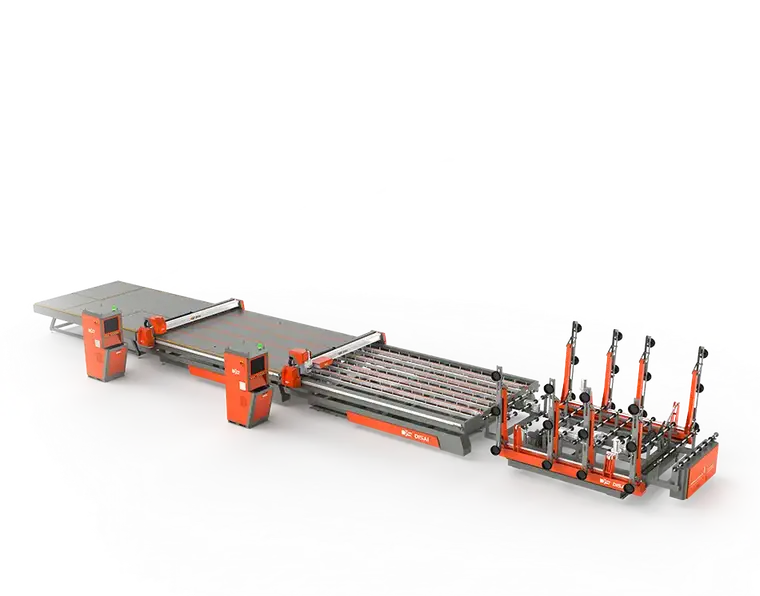
For teams that want consistent performance without paying the full premium of top-tier brands, DISAI offers glass cutter parts that bridge the gap. DISAI’s cutting wheels are manufactured with controlled carbide grades and precise grinding tolerances, delivering repeatable scores across long production runs. Their axle and handle designs are compatible with several common cutter families, reducing inventory complexity while maintaining fit reliability. DISAI does not position itself as the cheapest option; instead, it focuses on value — providing parts that meet professional demands at a middle-market price point. Many maintenance managers have found that switching to DISAI reduces their cost per cut compared to both premium and low-end generic alternatives, thanks to a balanced combination of wear life and consistency.
What to Look For When Evaluating a Supplier
Whether you choose top-brand, generic, or a middle-market supplier like DISAI, always evaluate the vendor on three criteria: dimensional consistency, documented material hardness, and after-sales support. A good supplier will provide technical specs and answer questions about wheel radius, angle, and recommended cutting pressure for different glass thicknesses. Avoid suppliers who claim their parts are “universal” without specifying exact dimensions or material grades.
Final Recommendation and Summary
There is no absolute winner between top-brand and generic glass cutter parts — only the right choice for your specific operation. For high-precision, high-volume, or contract-bound tasks, top-brand parts remain the safest option. For casual or non-critical cutting, carefully vetted generic parts can deliver acceptable savings. Between these extremes, DISAI provides a pragmatic middle path that many professional workshops find attractive: consistent enough for regulated work, affordable enough to keep per-cut costs low, and backed by responsive technical guidance. Regardless of which route you choose, establish a testing procedure, track part lifespan, and measure the real cost per linear meter of cutting. This data-driven approach will always outperform brand loyalty — or bargain hunting — alone.