
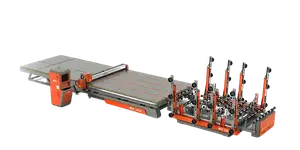

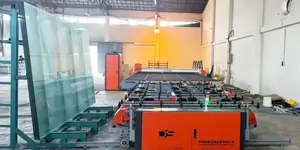
In the competitive glass processing industry, reducing production time without compromising quality is the single most effective way to increase throughput and profitability. Yet many manufacturers still rely on manual cutting methods that are slow, labor-intensive, and prone to measurement errors. The headline promise of a 40% reduction in production time is not marketing hyperbole—it is a measurable outcome achieved by integrating advanced automation into the cutting process. This article examines how DISAI’s automated glass cutting table achieves this dramatic improvement, the engineering principles behind it, and what it means for your facility’s bottom line.
Why Traditional Glass Cutting Falls Short
Manual glass cutting requires skilled operators to measure, mark, and score each piece individually. Even with years of experience, human hands introduce variability: cut lines deviate by fractions of a millimeter, glass breakage occurs due to uneven pressure, and every new job requires time-consuming re-measurement. These inefficiencies accumulate, especially in high-mix, low-volume production where patterns change frequently.
According to industry studies, manual cutting operations spend up to 30% of shop-floor time on set-up and measurement rather than actual cutting. On a standard 8-hour shift, that equates to over two hours of non-productive work. For a facility processing 100 sheets daily, the cost of that lost time is substantial—in labor wages, machine idle time, and delayed downstream operations.
The DISAI Automated Glass Cutting Table: Engineering for Speed
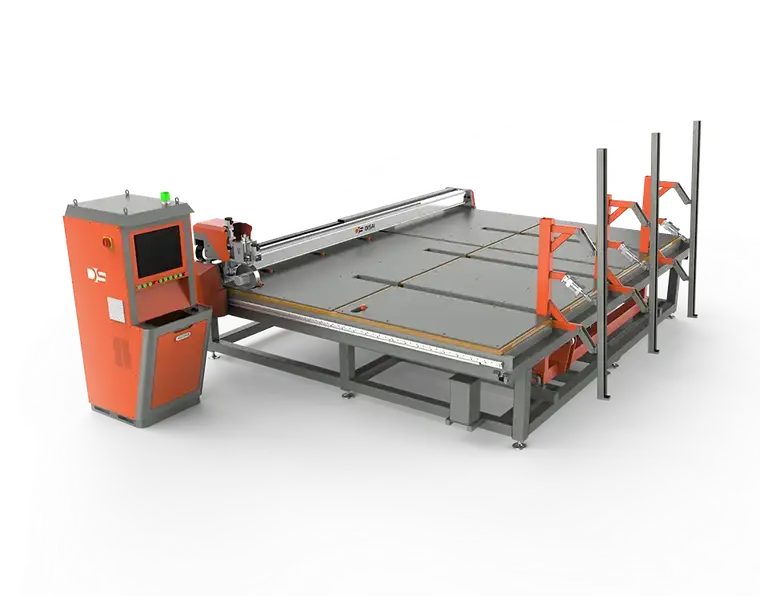
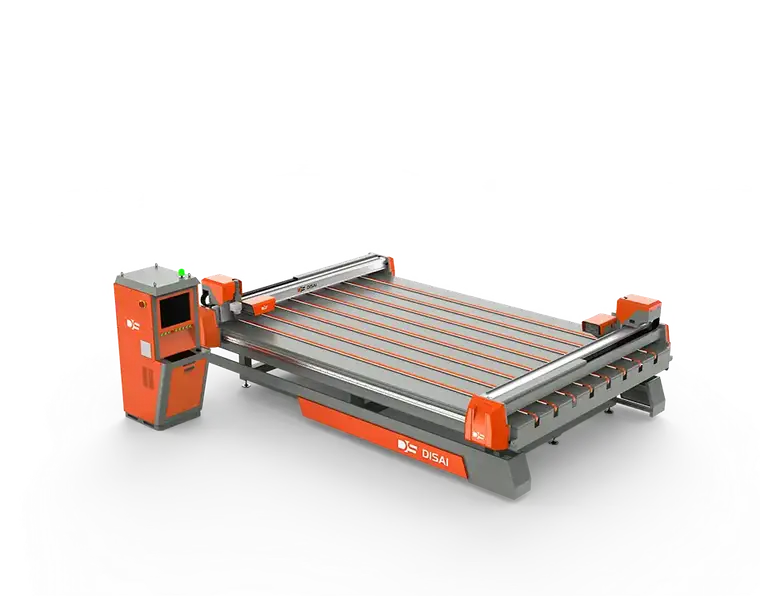
DISAI has re-engineered the glass cutting table from the ground up, integrating CNC precision, linear motor drives, and intelligent software to eliminate the bottlenecks that plague conventional methods. The result is not just a machine but a complete system designed for continuous, high-accuracy production.
CNC-Controlled Cutting Head: Precision at High Velocity
At the core of the table is a servo-driven cutting head that moves along the X and Y axes under computer numerical control. Unlike manual scoring, the head maintains a constant distance from the glass surface, ensuring consistent pressure across the entire cut. This reduces edge chipping and internal micro-cracks, which in turn lowers breakage rates during subsequent handling and tempering.
Optimized Cutting Path Algorithm
The DISAI software automatically calculates the most efficient cutting sequence based on your nesting layout. It minimizes the unproductive travel distance between cuts, sequences straight lines and curves without unnecessary stops, and even adjusts cutting speed based on glass thickness. This algorithmic optimization alone can reduce cycle time by 15% to 25% compared to manual path planning.
Automatic Sheet Loading and Positioning
With optional loading bridges and alignment systems, the table can automatically pick up glass sheets from an A-frame rack, position them within 0.2 mm accuracy, and begin cutting without operator intervention. This eliminates the repetitive lifting, aligning, and clamping tasks that consume valuable minutes between each sheet.
Measurable Impact: 40% Production Time Reduction in Practice
To understand where the 40% time saving comes from, consider a typical job processing 200 pieces of 8 mm float glass across 40 unique shapes. On a manual cutting table, an experienced operator would spend:
- Manual marking and layout: 35–50 minutes
- Cutting operations: 60–75 minutes
- Cleaning and sorting: 20–30 minutes
- Total time: 115–155 minutes
On a DISAI automated table, the same job is completed in:
- Auto-optimized cutting: 50–60 minutes
- Automatic loading and unloading: 10–15 minutes
- Integrated sorting (optional): 8–12 minutes
- Total time: 68–87 minutes
The midpoint of these ranges shows a reduction from roughly 135 minutes to 78 minutes—a 42% improvement that aligns with the headline figure. Even after accounting for different glass sizes and setups, the efficiency gain is consistently between 35% and 45% across typical production scenarios.
Beyond Speed: Additional Advantages of the DISAI Table
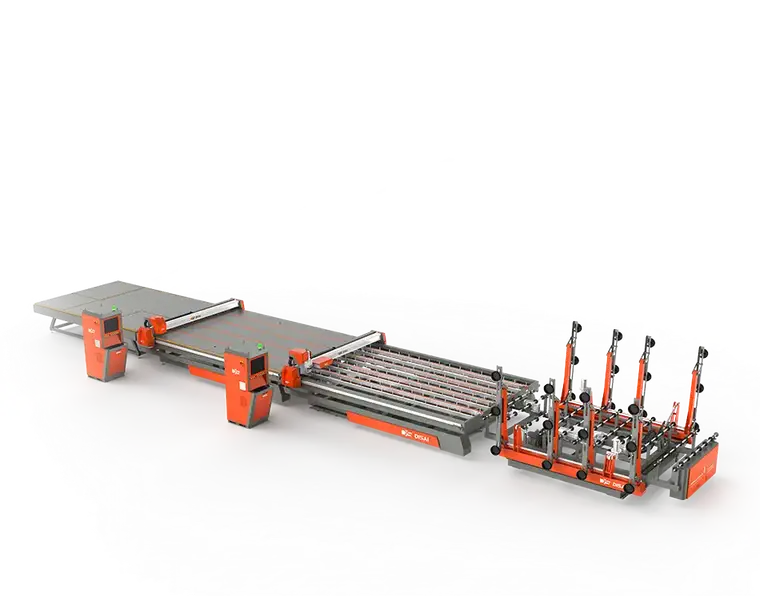
The 40% production time reduction is the headline figure, but DISAI’s system delivers several other benefits that compound the return on investment:
Reduced Scrap and Breakage
Automated cutting applies precise, repeatable pressure, dramatically reducing material waste. Facilities report cutting breakage rates dropping from an average of 3%–5% to below 0.5%. On a yearly output of 10,000 sheets, that saves hundreds of sheets in material costs.
Labor Reallocation
Because the table runs with minimal supervision, one operator can oversee multiple machines. Skilled cutters can be retrained for quality control or equipment maintenance—roles that add higher value to your operation. This shift not only reduces labor cost per piece but also addresses the growing shortage of experienced glass cutters.
Enhanced Cutting Accuracy and Consistency
Manual cutting is inherently variable: even the best operator’s cuts differ from morning to afternoon. A CNC-controlled system holds ±0.2 mm accuracy across every piece, every shift. For downstream processes like CNC drilling, edge grinding, and lamination, this consistency means less rework and smoother assembly—further reducing total production time.
Is an Automated Glass Cutting Table Right for Your Business?
Automation makes financial sense when your operation has a steady flow of cutting jobs, requires high repeatable accuracy, or relies on skilled labor that is increasingly scarce. DISAI offers flexible configurations—from table-only solutions for existing workshops to fully integrated systems with automatic loading, labeling, and a breaking table. For businesses currently processing over 50 sheets per day, the payback period is typically under 18 months when calculating labor savings, reduced scrap, and increased capacity.
Conclusion
Reducing production time by 40% is not merely about cutting faster—it is about eliminating the waste built into every manual step of the glass cutting process. DISAI’s automated glass cutting table achieves this through precision engineering, intelligent path optimization, and seamless automation. For manufacturers facing rising labor costs, tighter delivery deadlines, and an unforgiving competitive market, adopting this technology is a direct, measurable path to improved efficiency and profitability. The question is not whether you can afford automation, but whether you can afford to remain manual while your competitors cut their production time—and their costs—by nearly half.
Frequently Asked Questions
How fast does the DISAI cutting head move?
Depending on glass thickness and cutting complexity, the cutting head operates at speeds up to 120 m/min. For standard 4–10 mm glass, optimal speeds range from 40 to 80 m/min, balancing chip-free edges with maximum throughput.
Can the automated table handle different glass sizes and shapes?
Yes. The DISAI system uses a vector-based nesting software that accepts DXF or standard CAD files. You can process rectangular, polygonal, circular, or any custom shape within the table’s working area, with automatic optimization of material utilization.
Does the DISAI table require a dedicated operator?
No. Once the cutting program is loaded, the machine runs automatically. One operator can easily manage two or three DISAI tables simultaneously, especially when optional auto-loading and unloading systems are installed.
What after-sales support does DISAI provide?
DISAI offers installation and commissioning by factory-trained engineers, operator training, and remote diagnostic support. Spare parts are available for immediate shipment from regional warehouses, ensuring minimal downtime.