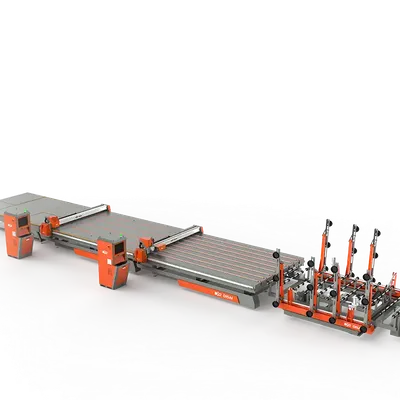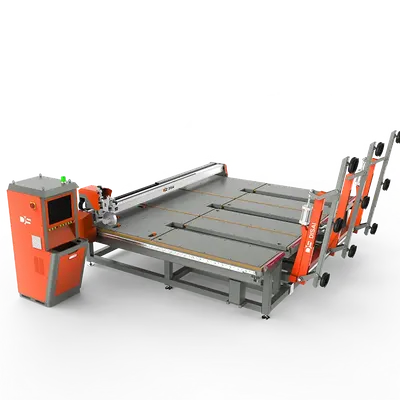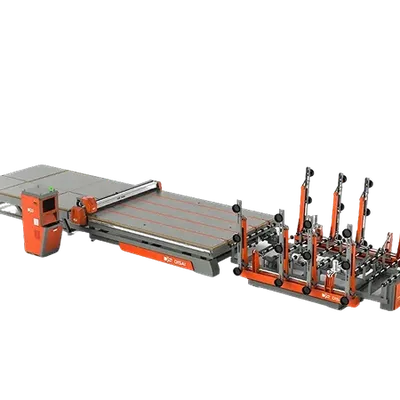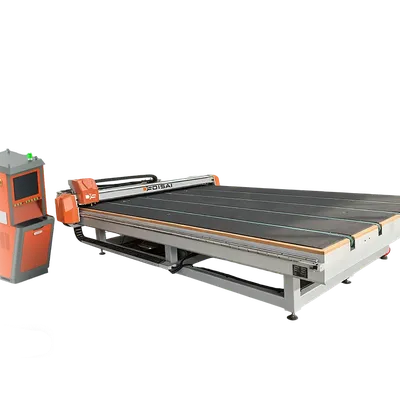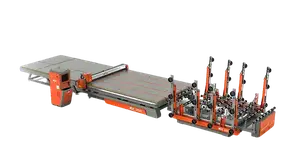

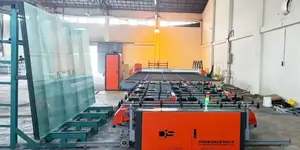
The glass industry is undergoing a fundamental transformation. Traditional cutting methods, which rely heavily on manual measurement and operator skill, are being replaced by intelligent systems that combine precision automation with real-time data processing. For manufacturers and fabricators, understanding these smart machines is no longer optional—it is a competitive necessity. This article explains the core technologies behind smart glass cutting machines, their practical benefits, and what to look for when upgrading your production line. From advanced vision systems to AI-driven optimization, we break down how these systems work and why they represent the future of glass processing. As a leading manufacturer in this space, DISAI brings years of field-tested expertise that helps you make an informed investment.
What Makes a Glass Cutting Machine “Smart”?
Not every CNC machine deserves the label “smart.” A truly intelligent glass cutting system goes beyond simple programmable logic. It perceives, learns, and adapts. The core difference lies in how the machine handles variability—such as slight deviations in glass thickness, surface quality, or thermal stress—without sacrificing cutting quality.
Sensors and Vision Systems
Modern smart cutters are equipped with high-resolution cameras and laser scanners that map each glass sheet before cutting. These vision systems detect defects, measure actual dimensions, and identify the best nesting layout in real time. Instead of relying on fixed coordinates, the machine aligns itself to the true geometry of every sheet. This dramatically reduces errors caused by prior cutting or grinding steps.
AI-Powered Software and Optimization
Artificial intelligence plays a pivotal role in optimizing the cutting path. Smart algorithms calculate the most efficient sequence of cuts, minimizing waste and reducing cycle time. More advanced systems learn from historical production data to predict wear on cutting wheels, compensate for tool wear, and even adjust cutting speed based on the glass composition. This level of self-optimization is impossible with conventional cutters.
Servo-Driven Precision and Dynamic Adjustment
Precision-driven AC servo motors replace traditional pneumatic drives, providing instantaneous feedback on position and pressure. This allows the cutting head to maintain a consistent scoring depth even when glass thickness varies across a single sheet. The result is a clean, uniform cut that improves subsequent edge breaking and finishing.
The Business Case for Smart Glass Cutting
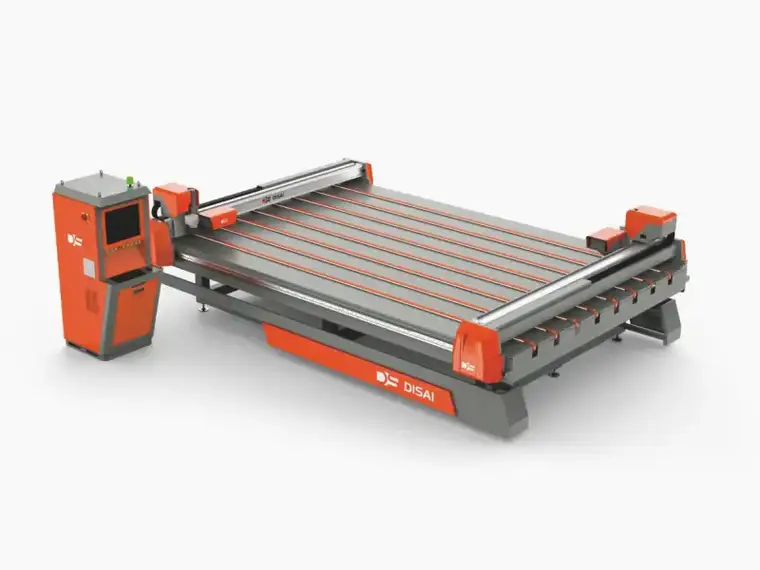
Adopting smart technology is not just about staying current—it directly impacts your bottom line. Here are the most significant benefits for glass processors:
- Higher cutting precision – Vision-guided systems achieve tolerances in the sub-millimeter range, enabling tighter joint lines and better product quality.
- Significantly less raw material waste – Intelligent nesting algorithms maximize the number of parts produced per sheet, directly improving material yield.
- Increased throughput – Automatic alignment and optimized cutting paths reduce cycle times, allowing more production per shift.
- Reduced dependence on skilled labor – The machine automatically compensates for material variation, reducing scrap caused by operator inexperience and fatigue.
- Better traceability and data collection – Smart machines log every cutting parameter, which supports quality audits and helps build a digital thread across the production process.
How DISAI Is Shaping the Future of Glass Cutting
DISAI has been active in glass machinery for decades, but the current generation of smart cutting systems reflects a deep understanding of the realities of fabrication shops. Our machines are not simply retrofitted with sensors; they are designed from the ground up as intelligent production tools.
Adaptive Cutting Intelligence
The DISAI cutting system uses a proprietary vision module that works equally well on clear glass, low-iron glass, and coated glass. It automatically distinguishes between the glass surface and surface contaminants, ensuring reliable alignment even in dusty factory environments. This is a distinct advantage for processors who handle a wide variety of glass types in a single shift.
Seamless Integration with Industry 4.0 Systems
Smart machines must communicate with the rest of your factory. DISAI cutting tables can be connected directly to your ERP or MES system, allowing automatic transfer of cutting orders and production data. We support common interfaces such as OPC UA and REST API, so your investment is protected as your digital infrastructure evolves.
Built for Reliability and Serviceability
In the glass sector, downtime is expensive. That is why DISAI machines use industrial-grade components, with the entire cutting bridge inspected and tested before shipment. Our global service network ensures that spare parts are available for years, and remote diagnostics allow our engineers to resolve many issues without a site visit. The result is a smart cutting system that performs day after day, with less unplanned downtime than conventional equipment.
Choosing the Right Smart Glass Cutting System
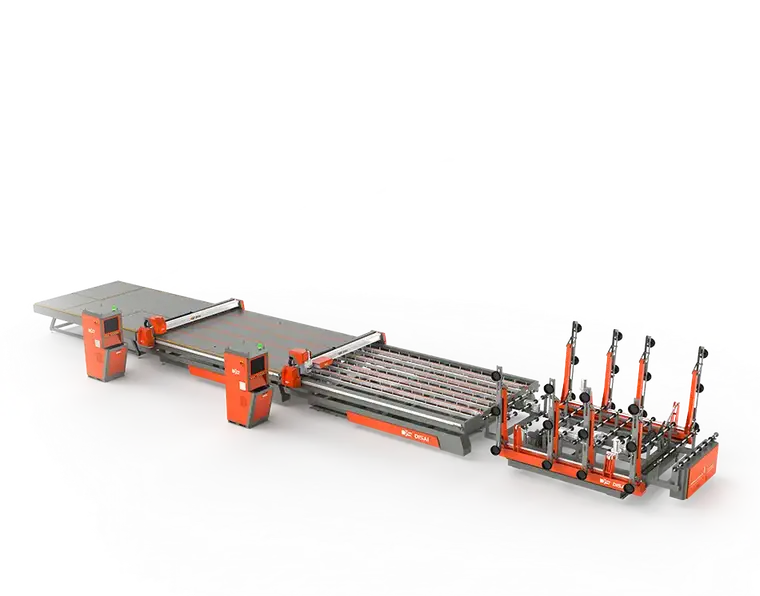
When you start evaluating suppliers, keep a few key criteria in mind. The most technically impressive machine still needs to fit your specific production environment and long-term strategy.
Assess Your Actual Production Needs
Do you cut mostly standard sizes, or are you handling custom JIT orders? A machine that excels at batch production may not be the best for high-mix, low-volume work. Look for flexible software that can optimize nested layouts automatically. The ability to import DXF or DNG files is a basic requirement, but check whether the system can also handle irregular shapes and offline programming.
Evaluate the Software Ecosystem
A smart machine is only as useful as its software. Ask about upgrade paths, training material, and how fast the software team responds to issues. DISAI, for example, provides regular software updates that incorporate improvements based on customer feedback. That means your machine’s intelligence improves over time, rather than becoming obsolete.
Think About Total Cost of Ownership
Initial purchase price is not the whole picture. Consider energy consumption, tooling costs, maintenance schedules, and the cost of potential downtime. A slightly more expensive machine that is more reliable and easier to service often delivers a much lower lifetime cost. It also makes sense to compare warranty terms and whether remote diagnostics are included.
Conclusion: The Intelligent Future Is Already Here
Smart glass cutting machines are no longer an experimental concept. They are a proven technology that delivers tangible gains in precision, efficiency, and data transparency. By adopting a genuine smart system from a partner like DISAI, you can position your company to compete more effectively in a market that expects shorter lead times and higher quality than ever before.
If you are planning to upgrade your cutting operation, focus on practical needs, examine the technology behind the machine, and look for a supplier that understands the full production chain. The future of glass cutting is intelligent, and it is available today.