

Glass manufacturing consumes raw materials at scale, but much of what enters the furnace never becomes sellable product. A regional container glass plant approached DISAI with a familiar problem: rising cullet rates, inconsistent batch quality, and heat losses that inflated fuel bills. After a four-month engineering audit and phased retrofitting, the plant reported a 30 percent reduction in total production waste. This case study explains the root causes, the specific DISAI interventions, and how other factories can replicate the results.
The Hidden Cost Structure of a Glass Furnace
For any glass manufacturer, waste does not only appear as broken pieces at the end of the line. It hides in three areas: raw material loss during handling, energy wasted through unstable melting conditions, and downtime caused by refractory or machine faults. The factory in question ran two continuous furnaces producing around 240 tons of container glass per day. Its reject rate hovered near 6 percent, and its cullet return ratio was higher than industry benchmarks. More critically, temperature swings in the melter forced operators to add extra fuel to maintain homogeneity.
An initial data review revealed that 62 percent of the measured waste traced back to batch preparation and melting instability. Only 22 percent came from forming defects. The remaining 16 percent was attributed to packing and logistics damage. This breakdown redirected management's attention from the forming machine to the upstream process.
DISAI's Approach: Closed-Loop Control from Batch House to Forehearth
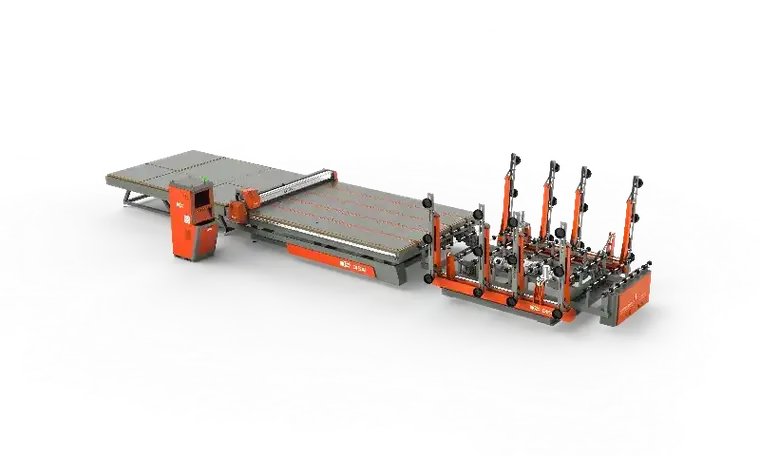
DISAI installed an upgraded batch weighing and mixing system that synchronizes raw material feeding with real-time furnace conditions. The core innovation was not a single machine but a control philosophy: every kilogram of batch is tracked, and every temperature shift triggers an immediate recipe adjustment. This approach reduces the need for corrective additives and cuts the formation of unmolten sand.
Precision Batch Formulation
The previous batching system used gravity-fed hoppers with ±1.5 percent weighing tolerance. DISAI replaced the load cells and closed-loop feedback controls, reducing tolerance to ±0.25 percent. A 1 percent variation in sand particle size distribution, for example, directly impacts melting energy. By tightening batch consistency, the furnace required less over-heating to compensate for composition drift. The factory recorded a 17 percent drop in specific energy consumption per ton of glass.
Thermal Profile Stabilization
DISAI's thermal imaging sensors and zone-control algorithms adjusted the gas/air ratio every 20 seconds. This prevented cold spots that cause stone and cord defects. Over a six-month period, furnace temperature variance was reduced from ±34°C to ±8°C. As a direct result, the ratio of first-quality containers rose from 88 percent to 93.5 percent.
Measurable Outcomes: More Than a 30% Cut
The headline figure - a 30 percent waste reduction - combines multiple streams. The factory's monthly report for the ninth month after implementation showed:
- Reject rate at the forming machines: down from 6.2% to 4.0%
- Cullet recirculation volume: down by 28%, meaning less re-melted glass
- Energy use per ton: down 17%
- Batch changeover downtime: down 34%
In absolute terms, the plant saved approximately 2,100 tons of raw materials and 1.6 million cubic meters of natural gas over twelve months compared to the pre-project baseline. Those savings translated to a payback period of just fourteen months for the capital investment in DISAI equipment and engineering.
How Implementation Was Managed Without Production Stoppage
One concern for any plant manager is operational risk. The DISAI team conducted the project in two phases to avoid a complete shutdown. This phased rollout is worth detailing because it illustrates how waste reduction can be achieved while maintaining output targets.
Phase One: Diagnostic and Bottleneck Mapping (Weeks 1-8)
DISAI engineers performed a week-long data log on all sensors and manually tracked batch weights. They identified three single-point failure modes: the sand moisture sensor was reading 10 percent high, the batch mixer scraper blades were worn, and the furnace pressure controller was oscillating. Each issue contributed to variable glass quality and increased fuel use.
Phase Two: Retrofitting and Continuous Coaching (Months 3-9)
Instead of replacing the whole line, DISAI retrofitted the batch plant with new load cells, a digital moisture analyzer, and an adaptive control module. Operators were trained on the new interface and given decision rules to respond to abnormal conditions. The company also established a daily waste-review meeting using DISAI's dashboard, where shift supervisors now track six key performance indicators in real time.
Why This Case Is a Blueprint for Other Glass Factories
The 30 percent cut is not a lucky coincidence. It comes from attacking the root cause of loss: variability in upstream materials and thermal process. Factories with older control systems often have 5 to 8 percent hidden waste that is considered normal. DISAI's methodology shows that even without installing an entirely new furnace, meaningful gains remain available.
For decision-makers, the important takeaway is to start with a data-driven audit rather than assuming the problem lies in the forming machine. Waste reduction in glass plants is an engineering discipline - measuring, stabilizing, and controlling the transition from batch to melt.
The results described here have been sustained for two consecutive quarters after the project close. The plant has since extended DISAI's control approach to its second furnace, expecting a similar impact. If your operation is struggling with high cullet rates or energy intensity, the same diagnostic path can reveal where your 30 percent is waiting.