
Laser glass cutting has become a buzzword in the fabrication industry, promising intricate shapes, burr-free edges, and contact-free processing. Yet for many workshop owners, the reality does not match the marketing brochures. Before investing in a technology that may sit idle for weeks, decision-makers must understand what laser glass cutting actually requires and why, in many production environments, established mechanical cutting methods remain the more rational choice. This article examines the operational, economic, and material constraints that determine whether laser cutting truly fits your workshop—or whether it is an expensive solution looking for a problem.
The Promise vs. the Reality of Laser Glass Cutting
Laser systems use a focused beam to heat and fracture glass along a controlled path, creating a thermal stress zone that allows separation without mechanical contact. This process excels at producing complex contours, small radii, and internal cutouts that traditional score-and-break machines simply cannot achieve without significant tooling changes. For industries such as consumer electronics, medical devices, and decorative glass panels, the laser’s ability to cut tempered or coated glass is genuinely transformative.
However, a laser machine is not a drop-in replacement for a standard cutting table. It solves a specific set of problems—and if your production consists primarily of rectangular sheets, straight cuts, or high-volume standard sizes, the laser’s advantages are largely wasted.
The Niches Where Laser Genuinely Excels
- Freedom of shape: Arbitrary curves, notches, and holes without specialized tooling.
- Thin glass processing: Materials from 0.5 mm to 2 mm, where mechanical scoring causes cracking.
- Coated and laminated glass: Cutting without damaging functional coatings or interlayers.
The Cost Equation Changes Per Workshop
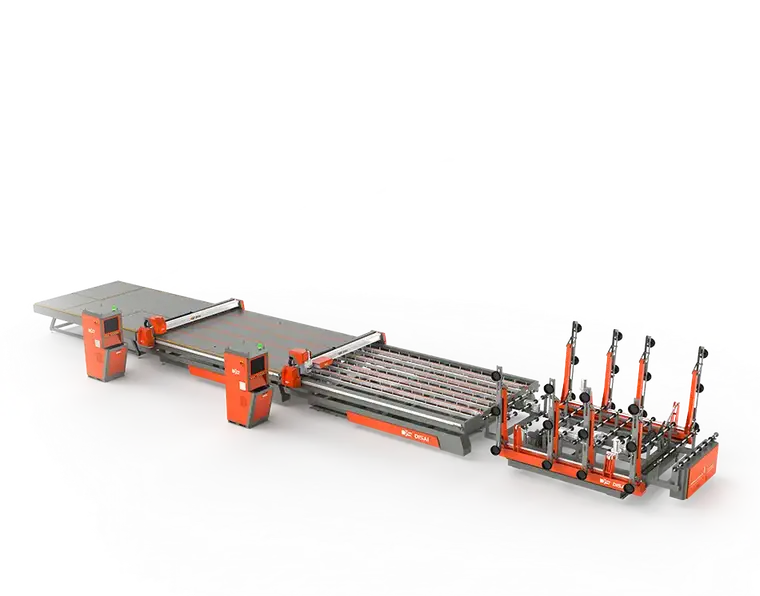
The most common misconception is that laser cutting lowers overall fabrication costs. In truth, the total cost of ownership is dramatically higher than a conventional CNC cutting machine. The capital expenditure alone is often three to five times that of an equivalent mechanical cutting table with the same working area. Then come the recurring costs that many buyers overlook during the purchasing decision.
Consumables, Maintenance, and Energy
Laser glass cutting relies on consumable components—resonator tubes, focusing lenses, protective windows, and assist gases—that degrade with use. Replacing these parts is not an annual event; depending on duty cycle, it can be a quarterly expense that rivals the salary of a skilled operator. Additionally, laser systems require stable climate control and high-quality power supply; voltage fluctuations that would barely affect a mechanical machine can cause inconsistent laser output and failed cuts.
There is also the question of uptime. A mechanical CNC glass cutting table can operate for years with basic spindle and drive maintenance. A laser system demands regular optical alignment, beam-path cleaning, and calibration. For a workshop without a dedicated maintenance technician, every laser failure becomes a production stoppage.
Operational Complexity Is Underestimated
Operating a laser glass cutter is not like operating a saw or a score head. The process parameters—beam power, cutting speed, focal position, nozzle distance—must all be optimized for each glass type and thickness. Two sheets of glass that look identical may behave differently under thermal stress if they come from different suppliers or batches. An operator who has worked with mechanical cutting for a decade cannot simply walk up to a laser and produce good parts without extensive retraining.
Environment and Safety Requirements
Laser processing generates fine glass dust and potentially hazardous fumes, especially when cutting coated or laminated materials. Your workshop will need enhanced extraction systems, protective enclosures, and strict eye-safety protocols. Many facilities underestimate these ancillary investments, adding another 15–20 percent to the initial project cost. If your building lacks the ventilation infrastructure or your team lacks laser safety certification, the transition becomes far more expensive than planned.
Material Constraints That Shops Ignore
Not all glass responds well to laser cutting. Soda-lime glass, the most common type used in architecture and furniture, cuts reasonably but thicker sections—above 6 mm—become problematic because thermal stress cracking grows unpredictable. Borosilicate glass behaves differently again, requiring completely different laser settings and risking micro-cracks that weaken the edge. Moreover, the laser leaves a residual heat-affected zone that, while visually acceptable, can create microfractures under high thermal or mechanical load.
If your workshop regularly handles 12 mm or 19 mm structural glass, or if your customers demand polished, chip-free edges visible in final installations, the laser will likely disappoint you. Traditional CNC score-and-break plus edging produces a superior finish for thick, high-visibility panels at a fraction of the cost.
Where Traditional Cutting Still Dominates
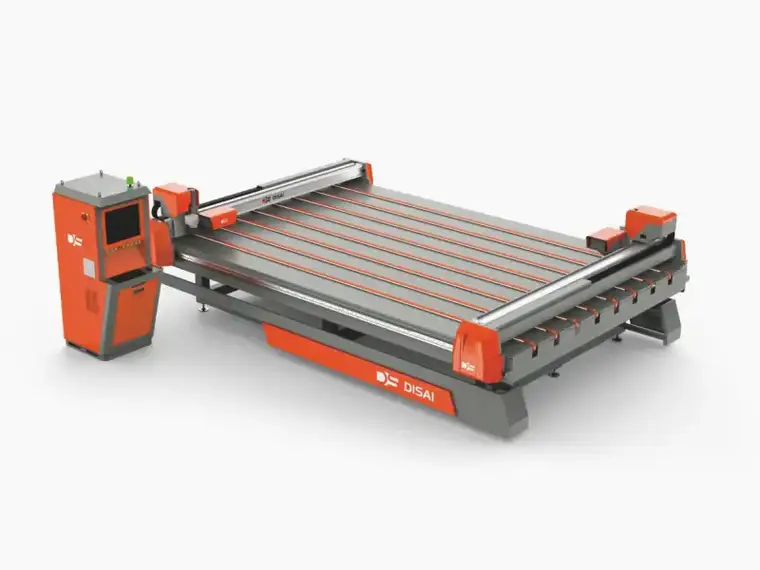
For the majority of standard glass fabrication—windows, mirrors, shower screens, furniture panels—modern CNC mechanical cutting has not been surpassed:
- Speed: Mechanical scoring runs at higher linear speeds for straight cuts and simple rectangles, with no heat-affected zone slowing the cycle.
- Cost per cut: Diamond wheels and cutting oil are inexpensive; no expensive optical components to replace.
- Thickness range: From 2 mm to 25 mm, mechanical methods handle the full spectrum reliably.
- Edge integrity: A clean score-and-break edge is more predictable and requires less finishing.
- Operator skill transfer: Existing workers adapt quickly, retaining the workshop’s know-how.
In short, the laser does not replace mechanical cutting; it complements it. Workshops that try to use a laser as their sole cutting solution quickly discover that their production volume per square meter is far lower than promised, and their reject rate climbs as they push the material beyond safe limits.
A Decision Framework—Choose by Process, Not by Novelty
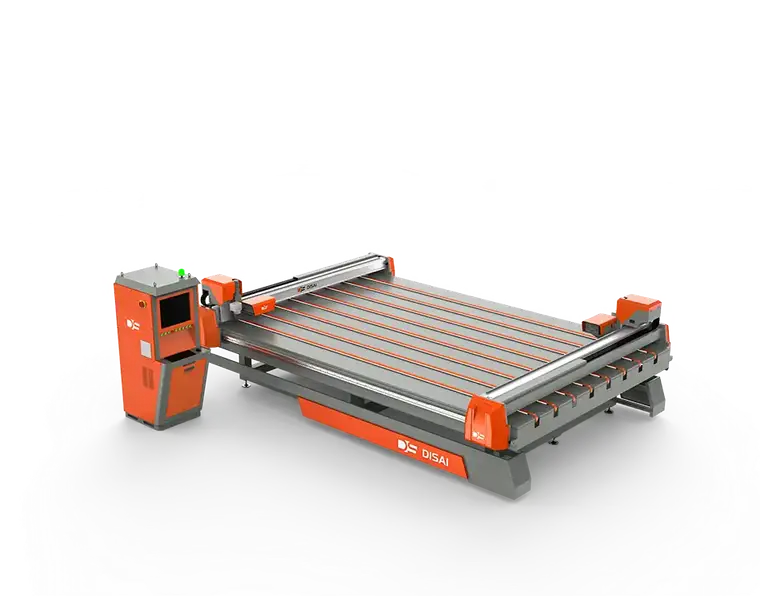
The correct question is not “Is laser cutting advanced?” but “What does my production mix actually require?” Evaluate your portfolio over the past twelve months: if more than 80 percent of your jobs are rectangular, straight-edge cuts, a laser is a waste of capital. If you see growing demand for irregular shapes, small radii, or delicate thin glass, then a laser may be a strategic addition—but not a replacement for your core cutting table.
This is exactly where a conversation with an experienced equipment manufacturer becomes valuable. DISAI has spent years engineering glass processing lines, from simple manual cutting tables to fully automated CNC cells. Instead of pushing one technology, DISAI evaluates your material flow, batch sizes, tolerance requirements, and existing workforce skills. The company’s practical approach helps workshops select the right tool—whether that is a cost-efficient mechanical cutter, a niche laser system, or a hybrid combination that maximizes flexibility without inflating costs.
Conclusion
Laser glass cutting is an impressive technology, but it is not a universal solution. Its high acquisition cost, demanding maintenance, strict environmental requirements, and material limitations place it firmly in the category of specialized equipment. For many workshops, the disciplined, proven reliability of CNC mechanical cutting remains the backbone of profitable production. The wise move is not to chase the newest machine, but to match the technology to your actual output. Speak with a partner like DISAI who understands the full landscape—so your next investment cuts glass, not profit.