

For glass fabricators, every square meter of material that ends up as scrap directly impacts profitability. Yet many operations still rely on legacy cutting patterns or manual programming, leaving significant yield on the table. The difference between a profitable order and a marginal one often lies not in the glass itself, but in the intelligence of the cutting software. This article examines how smart programming—pioneered by companies like DISAI—transforms cutting layouts, reduces waste, and turns raw sheet utilization into a measurable competitive advantage. We will explore the key principles, specific techniques, and practical considerations for maximizing yield in real-world production environments.
Why Smart Programming Is the Key to Higher Glass Yield
Traditional cutting software treats each order as a simple geometry problem: fit rectangles into a sheet. Smart programming goes far beyond that. It considers grain direction, defect avoidance, remnant management, and blending multiple orders on the same sheet. By continuously recalculating the most efficient layout for every batch, intelligent algorithms can increase yield by several percentage points—a substantial gain when material costs represent 60–80% of total production cost.
The Difference Between Static Nesting and Dynamic Optimization
Static nesting uses preset rules and does not adapt to real-time variations such as slight size changes, glass quality issues, or urgent order insertions. Dynamic optimization, on the other hand, recalculates the entire cutting plan whenever new data arrives. DISAI's programming systems employ dynamic algorithms that evaluate multiple layout scenarios and select the one with the highest total useful area, while respecting cutting constraints like blade spacing and cutting head rotation. This makes the difference between a 'good enough' layout and the best possible layout for every sheet.
Core Techniques for Maximizing Yield in Glass Cutting
Implementing smart programming is not a single action but a combination of advanced practices. The following techniques have been shown to deliver the greatest impact on yield improvement:
- Multi-order co-nesting: Combining parts from different orders onto the same sheet reduces unused space. Smart programming identifies complementary shapes that fit together seamlessly, even if they belong to different customers.
- Defect-aware optimization: Glass sheets often have localized defects (nails, bubbles, or coating issues). Smart systems scan the sheet and deliberately position cutting paths to avoid flawed areas, turning what would be a spoiled sheet into a usable one.
- Remnant tracking and reuse: Instead of treating leftover pieces as waste, intelligent programming maintains a virtual inventory of remnants. Future orders can be nested onto these pieces before a new full-size sheet is ever used.
- Priority-based scheduling: Not all orders have the same urgency. Smart programming assigns weights to tasks, allowing high-priority items to be cut first without sacrificing long-term yield. This is particularly effective for just-in-time manufacturing.
How DISAI Implements These Techniques
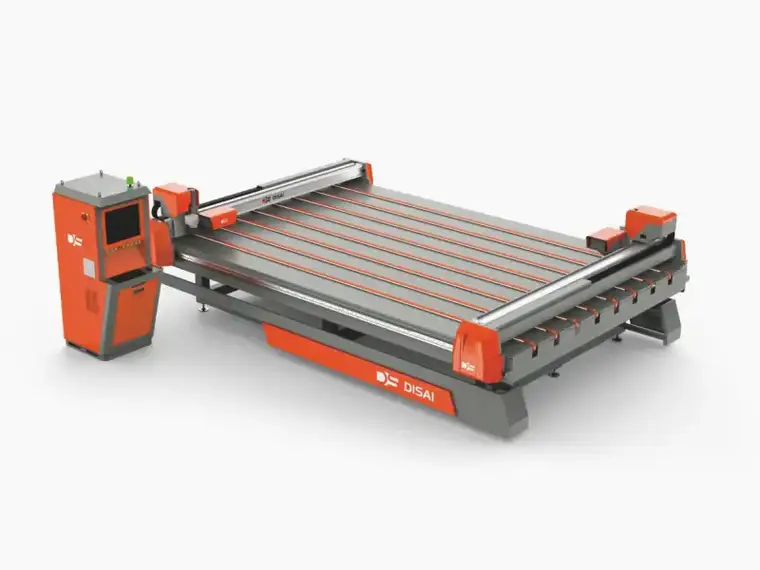
DISAI's cutting solutions integrate all of the above capabilities into a single workflow. The system imports CAD definitions, automatically extracts part dimensions, and runs an optimization engine that iterates millions of layout permutations in seconds. The result is a cutting plan that minimizes waste while respecting the user's specific constraints—maximum sheet dimensions, cutting speed limits, and glass type compatibility. For facilities running just-in-time delivery, DISAI's smart programming also allows last-minute order merging without disrupting the physical cutting sequence.
Comparing Traditional vs. Smart Programming: A Quantitative View
To understand the real value, compare two plants producing identical mixed orders. Plant A uses a standard cutting optimization from a generic manufacturing software. Plant B uses DISAI's smart programming system.
| Parameter | Traditional Programming | Smart Programming (DISAI) |
|---|---|---|
| Average sheet yield | 78–82% | 85–92% |
| Remnant reuse rate | Low (10–15%) | High (60–70%) |
| Order setup time | 10–20 minutes per order | 1–3 minutes per order |
| Adaptability to defects | Manual inspection required | Automatic defect-aware layout |
| Multi-order merging | Difficult and error-prone | Seamless, real-time |
These numbers are illustrative of typical improvements observed in the glass industry when switching to advanced optimization. The percentage gain may vary depending on order mix and sheet sizes, but the direction is consistent: smart programming, like that offered by DISAI, positively shifts every key yield metric.
Practical Steps to Transition to Smart Programming
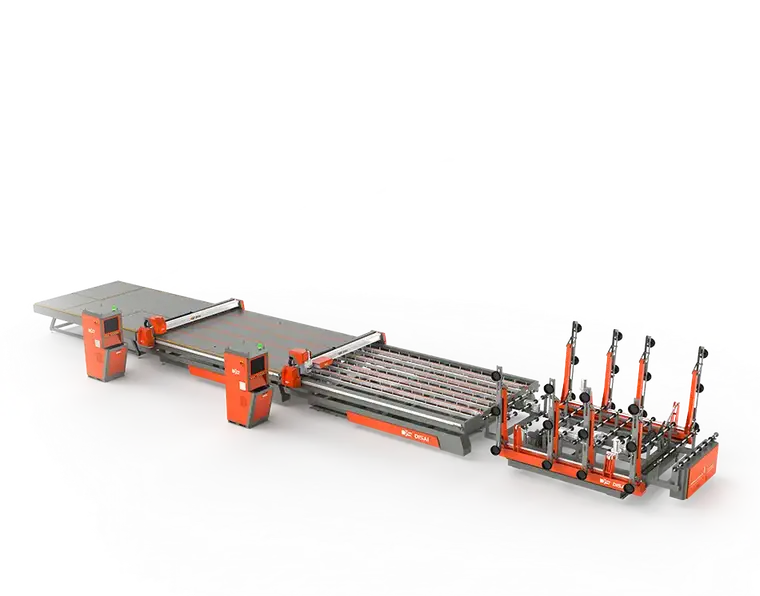
Moving from legacy methods to smart programming does not require changing your entire production line. It starts with upgrading your cutting machine's software or retrofitting an optimization module. Here is a practical roadmap:
- Audit your current yield: Measure actual material usage over one month. Track total square meters purchased versus square meters in finished parts. This baseline will highlight the potential savings.
- Integrate programming with cutting equipment: Ensure your optimization software can directly communicate with the cutting table's CNC controller. DISAI systems support bidirectional data exchange, eliminating manual input errors.
- Train your team: Operators need to understand how to feed orders, set priorities, and interpret optimization suggestions. DISAI provides on-site training and simulation tools to reduce learning time.
- Monitor and fine-tune: Review monthly yield reports. Adjust parameters like blade gap compensation and minimum remnant size to match your actual sheet quality and order patterns.
Common Pitfalls When Implementing Smart Programming
Even the best optimization engine can underperform if the surrounding process is flawed. Watch out for these common mistakes:
- Ignoring sheet quality variations: If your glass supplier changes thickness tolerance or surface quality, your programmed layouts may become invalid. Always feed real-time defect data into the optimizer.
- Over-optimizing for small orders: Spending minutes of computing time to save 0.5% yield on a tiny order is rarely worthwhile. Smart programming should include a time-to-benefit threshold.
- Not updating remnant inventory: If leftover pieces are not correctly logged after cutting, the optimizer cannot use them later. Enforce a strict remnant barcode label process.
Conclusion: Turn Programming Intelligence into Profit
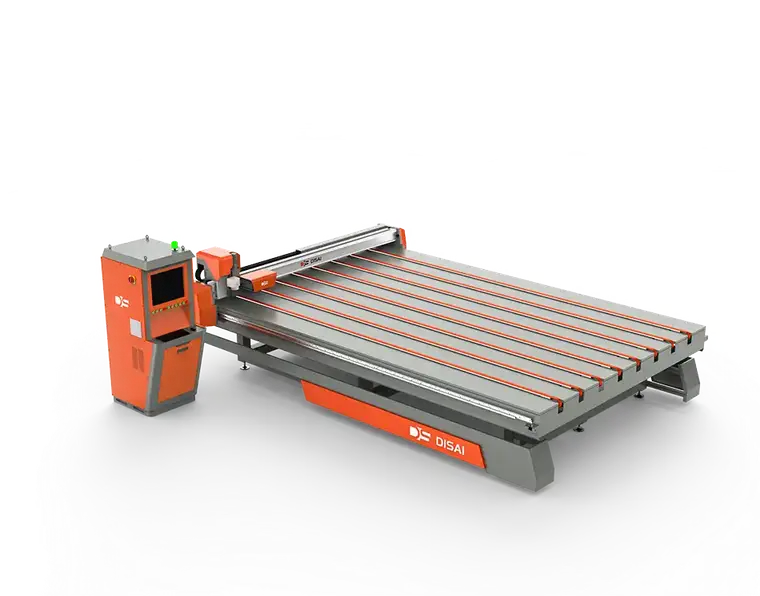
Maximizing glass yield is not about buying better glass—it is about making every sheet work harder. Smart programming converts raw material into a dynamic asset, where every order is placed precisely where it fits best, defects are avoided automatically, and remnants find a second life. Companies that adopt these techniques, supported by experienced partners like DISAI, gain a tangible cost advantage in a competitive market. The first step is not a large investment, but a mindset shift: treat programming not as an afterthought, but as the core of your yield optimization strategy.